This research paper explores the emerging uses of artificial intelligence (AI) in teaching and learning, as well as teachers’ beliefs about AI. The findings draw from responses from more than 8,000 classroom teachers across 267 schools in 27 countries participating in the Apple Distinguished Schools (ADS) program.
The rapid proliferation of AI in education has generated widespread interest and a growing body of research examining the frequency, adoption, and use of AI across educational populations and settings (Aravantinos et al., 2026; Burns et al., 2026; Kaufman et al., 2025; Tang & Zhong, 2026). This study offers a unique perspective focused on global PreK–12 classroom teachers with experience in one-to-one student technology classroom settings. Participating ADS schools represent a broad range of public and private educational settings, cultures, communities, and curricular standards and frameworks.
Key Findings include:
AI use varies across subjects, grade levels, and educational settings. Teachers and students are incorporating AI in different ways depending on their instructional context and learning needs.
Teachers are using AI for a range of professional tasks, including ideation, lesson planning, grading, and communication.
Most teacher uses of AI align with Substitution and Augmentation within the SAMR framework. These patterns are like those commonly associated with teachers’ use of traditional educational technology.
Student use of traditional educational technology also tends to center on Substitution and Augmentation. However, there was greater evidence of Modification and Redefinition when students were given sanctioned opportunities to use AI.
AI may offer its greatest educational potential when it enables new forms of learning rather than simply making existing practices more efficient. Thoughtfully designed student use of AI may provide opportunities to transform learning tasks and expand how students engage with ideas, demonstrate understanding, and participate in learning.
These findings suggest that while current AI use often reflects established educational technology practices, sanctioned student use may create opportunities for more substantial changes in teaching and learning.
Acknowledgements
Recognizing the partners, researchers, and participating teachers who made this study possible.
+
This research study was developed in partnership with Apple Distinguished Schools, funded by Apple Inc., and independently carried out by the study authors and research team at Reflective Educational Research. All data was collected voluntarily and anonymously by teachers who provided active consent to have their results analyzed and shared. The authors express thanks to Christine Yang, Zhexun "Cinna" Xin, and Samuel Fiorillo for their design, analytic, and reporting support. The authors would also like to thank all the participating teachers for sharing their voice and the Apple Distinguished School Community for the ongoing collaboration and support.
Preferred Citation: Bebell, D., Burt. K., and Puentedura, R. (2026). Innovation in the Age of AI: Investigating Teaching and Learning Across Apple Distinguished Schools. [White paper]. Reflective Educational Research.
Introduction
Contextualizing the rapid integration of educational technology and AI within modern K–12 classrooms.
+
Over the past several decades, research has shown that well-designed and well-supported educational technology programs can expand student and teacher access to learning opportunities and materials, strengthen teaching and learning practices (Bebell & Burraston, 2014), and improve student outcomes, including attendance (Heppen et al., 2020), engagement (Bebell & Burraston, 2014), and academic performance (Bebell & Pedulla, 2015; Kennedy et al., 2016; Stoneman, 2018; Zheng et al., 2016). However, poorly managed or poorly implemented programs often fall short of their intended goals (Cristia et al., 2017; Escueta et al., 2020).
Although educational technology has evolved for more than five decades (Papert, 1980), many educators, school leaders, policymakers, and parents struggle to keep pace with the expanding range of digital tools that support teaching, learning, and school management (Reich & Dukes, 2024). Technology now shapes much of everyday educational practice. Teachers plan lessons with online tools, deliver instruction through presentation platforms, communicate electronically with colleagues, students, and families, and use Learning Management Systems (LMS) and Student Information Systems (SIS) for grading, record keeping, and administrative work. Students also use educational technology across many parts of their school experience, including accessing information, taking notes, writing, presenting, creating digital projects, completing online assessments, and using learning platforms (Bebell & Burt, 2025; Mishra et al., 2023).
Within this already technology-rich context, public access to large language models (LLMs) and artificial intelligence (AI) tools has rapidly captured widespread attention, including among teachers and students quickly becoming routine parts of classroom practice. Across United States (U.S.) high schools, a College Board survey found that student AI use for schoolwork increased from 79% to 84% between January and May 2025, while 69% of students reported using ChatGPT to support assignments or homework (Adair et al., 2025). In a study of early AI practices among United Kingdom (U.K.) students, Ofcom reported that 40% of online children ages 7–12 and 79% of teenagers had used generative AI tools (Ofcom, 2023). Similarly, the National Literacy Trust found that U.K. teenagers’ AI use increased from 37% in 2023 to 77% in 2024, then stabilized at 67% in 2025, while weekly-or-more use rose from 31% to 46% (Picton, 2024, 2025). As student access to AI expands and changes quickly, there are many new questions about equity and about how students actually use these tools.
Educators’ use of AI tools is also quickly evolving. A national Gallup and Walton Family Foundation survey found that 60% of U.S. teachers used AI tools during the 2024–2025 school year, with 32% using AI at least weekly (Ash, 2025). The Brookings Institute’s 2026 synthesis of interviews and research on AI in global schools demonstrated the strong impacts that generative AI has already made shaping many students’ learning experiences and raising questions how such tools can enrich or diminish learning (Burns et al., 2026). Indeed, the research concludes that AI-based tools offer far greater risks and opportunities for educational disruption than most prior technologies by automating the cognitive functions of the underlying learning task (Ibid).
As access to AI tools expands, research suggests many emerging uses appear misaligned with educational goals such as creativity, collaboration, critical thinking, and deeper cognition (Jargon, 2024; Korbey, 2023). Teachers and school leaders have also warned that students may use AI as a cognitive surrogate rather than a cognitive partner (Burns et al., 2026), weakening the learning opportunities these tools are intended to support.
Using the Apple Distinguished Schools (ADS) community as a distinctive research setting, this paper examines AI as part of a broader ecosystem of technology practice and pedagogy. The ADS program is a voluntary program of over 1,000 PreK–12 public and private schools in over 40 countries. Participating schools differ widely in context and design but share a commitment to using Apple technology to support creativity, collaboration, and personalized learning (Apple Distinguished Schools, 2025). The criteria for program inclusion include:
Schools must participate in a one-to-one device program for at least two academic years.
Educators integrate technology creatively and meaningfully into their curriculum.
In regions where it is available, at least 75% of teachers hold Apple Teacher distinction.
Each school demonstrates continuous improvement and positive student outcomes.
This paper extends prior ADS research (Bebell & Burt, 2025) examining the relationships in teacher and student practices and student engagement. Prior results from this network showed that although technology access was similarly distributed across a highly diverse set of public and private schools, students’ use of technology for creativity and collaboration had the strongest associations with student engagement. This finding makes the ADS community a useful context for examining whether emerging AI practices align with the kinds of technology use most closely associated with engagement. Accordingly, this paper addresses four research questions:
What are teachers' beliefs and perceptions about the educational value of AI tools?
How and when are teachers and students across the global ADS community using AI tools to support learning?
How do teachers’ AI practices and beliefs vary across settings and learning conditions?
How do practices and beliefs toward AI relate to teachers’ instructional practices and student outcomes?
Theoretical Perspective
Using the SAMR model to conceptualize and organize teachers' technology and AI practices.
+
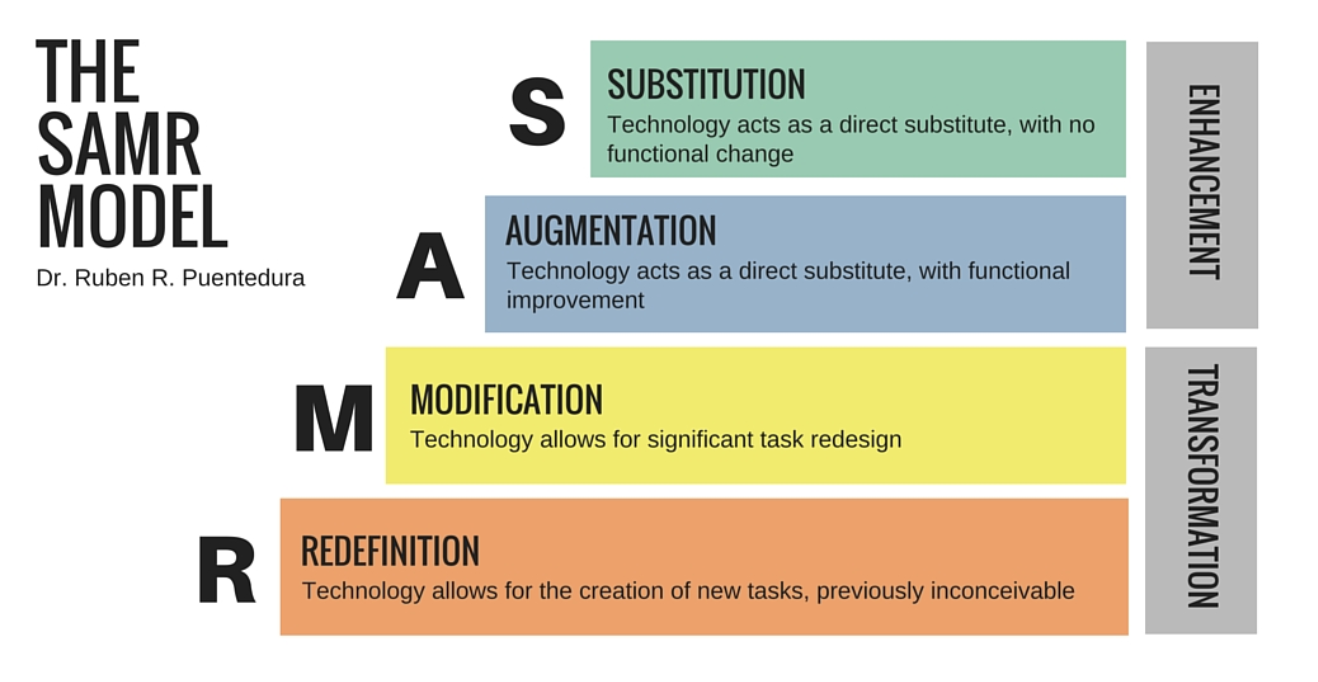
This study revisits the Substitution, Augmentation, Modification, Redefinition (SAMR) model to conceptualize and organize teachers’ technology practices. Widely used across PreK–12 settings, SAMR distinguishes technology practices by their educational purpose: Substitution, Augmentation, Modification, and Redefinition. The framework describes technology integration as a shift from using digital tools to replace traditional practices toward using technology to transform the learning task itself (Puentedura, 2009). For educators and policymakers, SAMR has offered a way to move beyond questions of access or device use and examine the intent, quality, and learning value of technology-supported practice. In this study, SAMR provides a framework for interpreting teachers’ and students’ emerging AI practices within a longer history of technology integration research (Blundell, et al, 2022; Hamilton, et al, 2016).
Methodology
An overview of the descriptive survey research approach used to collect data from over 8,000 global educators.
+
This study employs a simple, descriptive methodology to collect and analyze 8,035 teacher survey responses collected from a global community of PreK–12 schools participating in the Apple Distinguished School program between November 5, 2025, and March 13, 2026. We also draw on 17,078 teacher survey responses collected from Apple Distinguished Schools between 2022 and 2024 to provide additional longitudinal context for select analyses.
Survey research remains a foundational tool across educational technology scholarship and is particularly useful for capturing a wide variety of practices and beliefs at scale. Well-designed surveys contribute to the broader research and policy discourse by providing empirical insight into instructional practices and teachers’ perspectives. They also help school leaders and policy makers move beyond anecdotal evidence.
Building off prior research, the online teacher survey captured teacher backgrounds, technology access, and a range of classroom practices, values, and beliefs (Bebell et al., 2010; LEGO, 2024). Study participation was voluntary, fully anonymous, and each teacher provided active informed consent to have their results analyzed and shared. All survey questions and study procedures were reviewed and approved by the sponsor's legal team and overseen by a third-party institutional review board. Registered school leadership were invited to participate in the study via email from the sponsor. Schools that responded received further information and a link to share the online teacher survey, which most respondents completed in less than 15 minutes.
Notably, the resulting survey yielded 3,328 open-ended responses where teachers described an example of an innovative practice from their past school year. To identify themes in how teachers described examples of innovative practice, a thematic analysis and coding of response was performed using an offline large language model (LLM). Specifically, the research team employed GPT-OSS 120B on a custom-built offline computing system running LM Studio software to protect respondent privacy and allow for the consistent processing of large volumes of qualitative data. Multiple thematic aggregations across iterative passes and repeated convergence checks were used to strengthen coding consistency. Each check required the LLM (and the research team) to explore and compare alternative thematic structures and compare similar categories until the thematic structure stabilized and functioned similarly to more traditional inter-rate reliability procedure. To identify approximate SAMR levels, a prompt was constructed to perform deductive content analysis, assigning each survey response a SAMR level, if applicable.
As part of the research partnership, each of the 267 participating schools received individualized school results and study-wide findings through a customized, password protected data dashboard and school-specific report. With no shared intervention or educational connections beyond ADS status, the variations across school and classroom settings provide a powerful opportunity for comparison of natural variation across practices. The cumulative, collective value across thousands of classrooms (all with notable educational technology programs) provides a wholly unique, global, perspective illuminating evolving classroom practices across PreK–12 education.
About the Teacher Respondents
Demographic and professional backgrounds of the participating teachers across 27 countries.
+
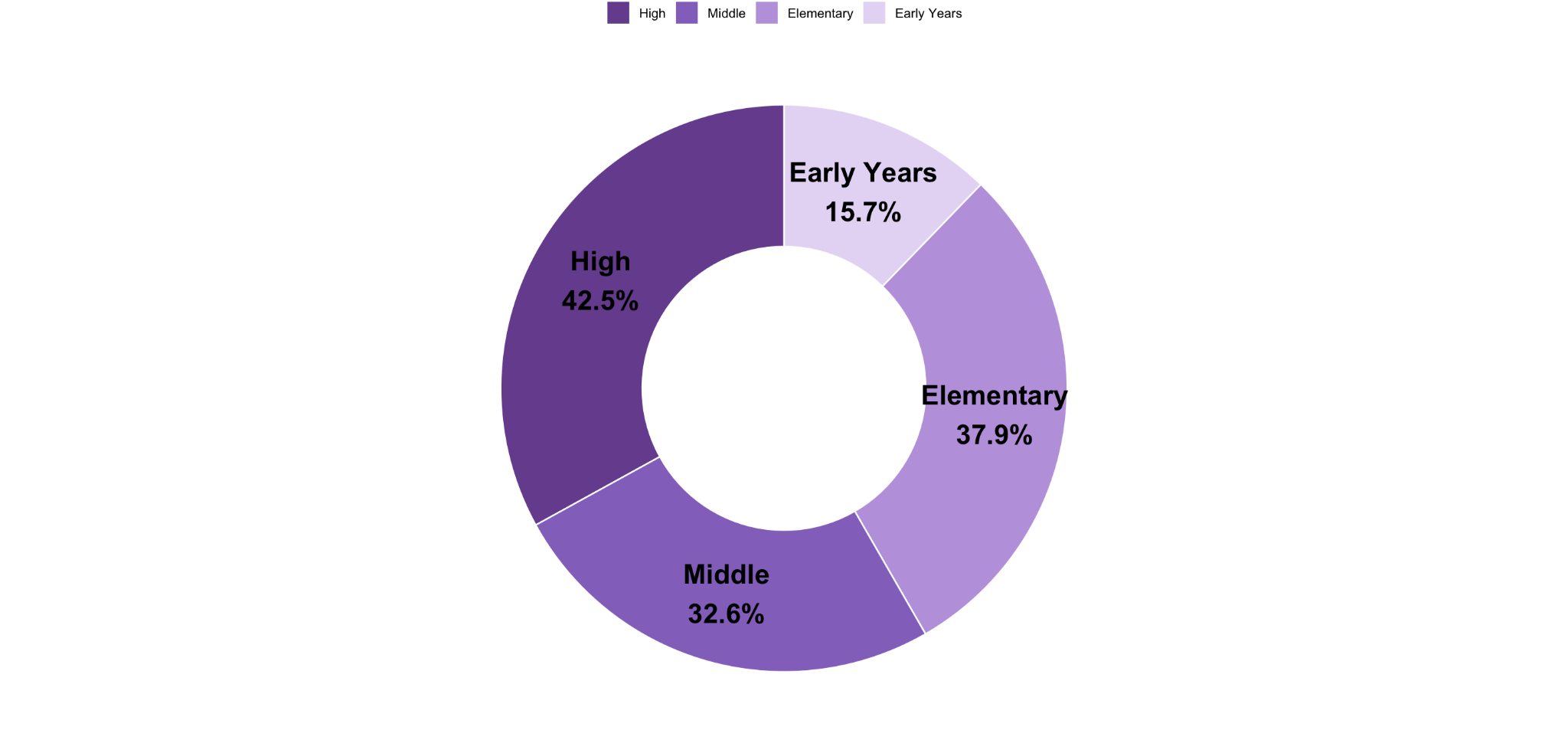
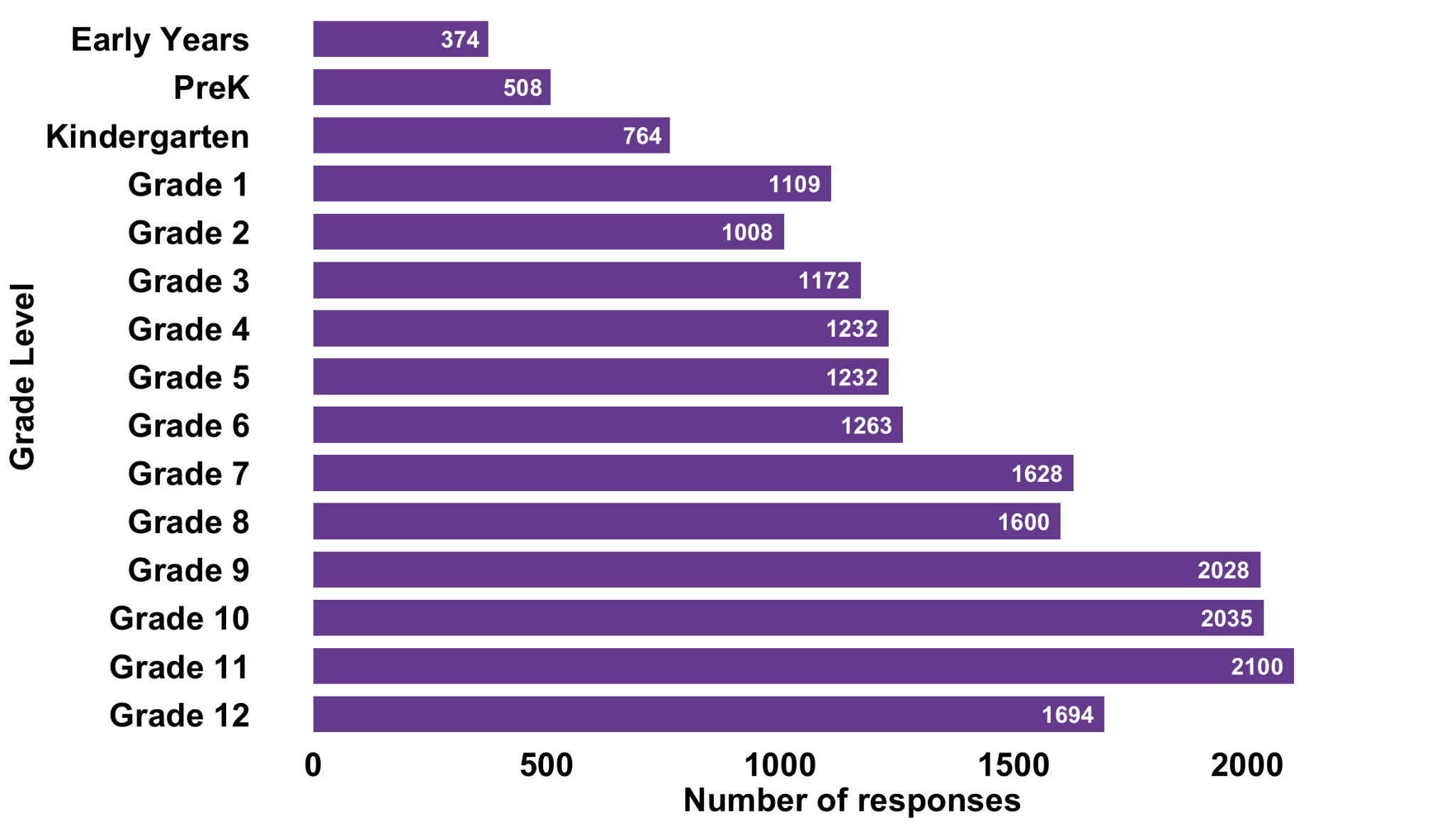
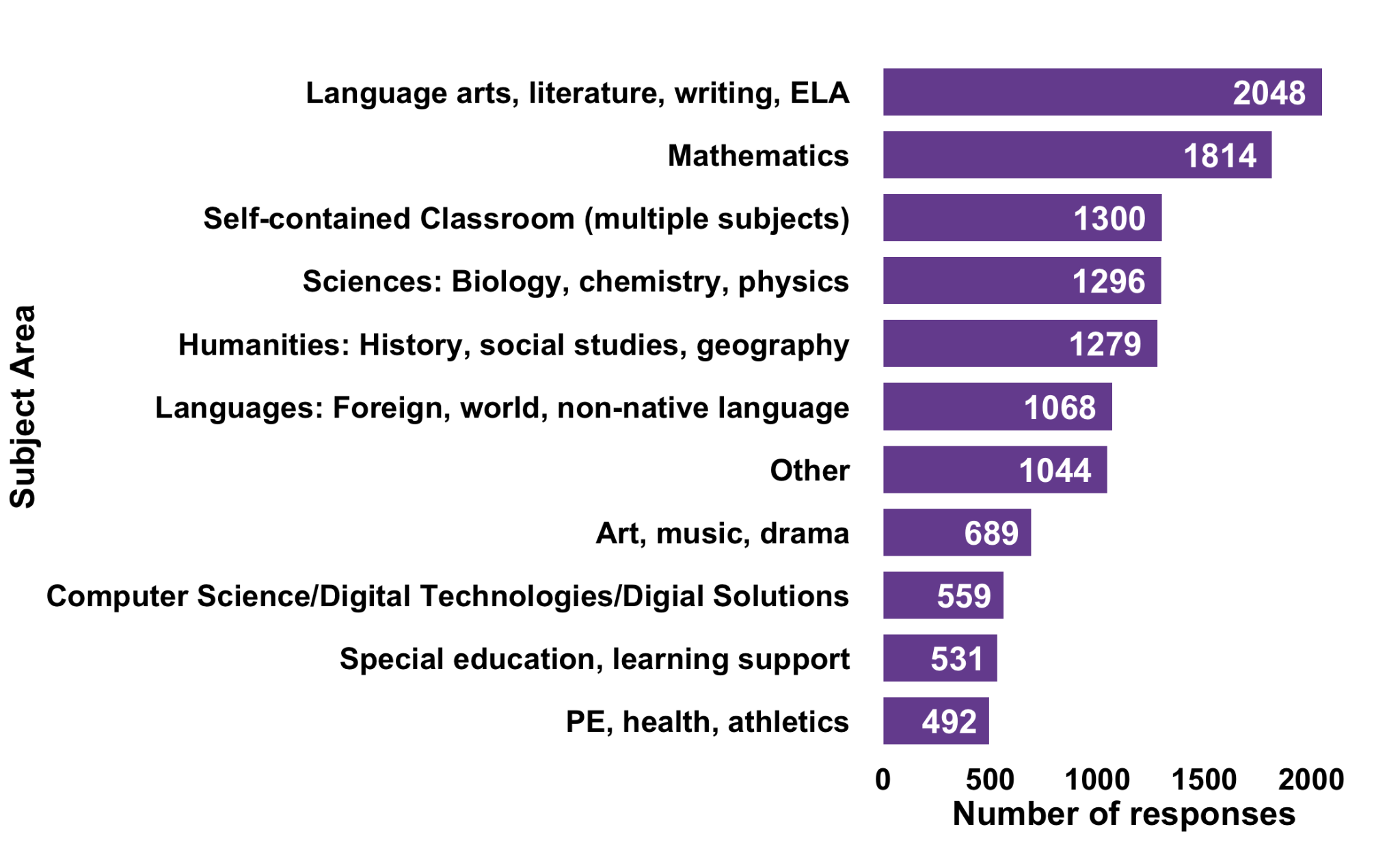
Between November 2025 and March 2026, a total of 8,035 classroom teachers participated in the Apple Distinguished School snapshot study across 267 schools in 27 countries (70% of responses were from outside of the U.S.). Before exploring teachers’ beliefs and practices, it is useful to describe the participants and contextualize this unique global sample. Many teachers reported serving more than one grade level or subject area. In total, 1,264 teachers served students in the youngest settings, including Early Years, PreK, or Kindergarten; 3,044 served elementary grades (1–5); 2,617 served middle school grades (6–8); and 3,412 served high school grades (9–12).
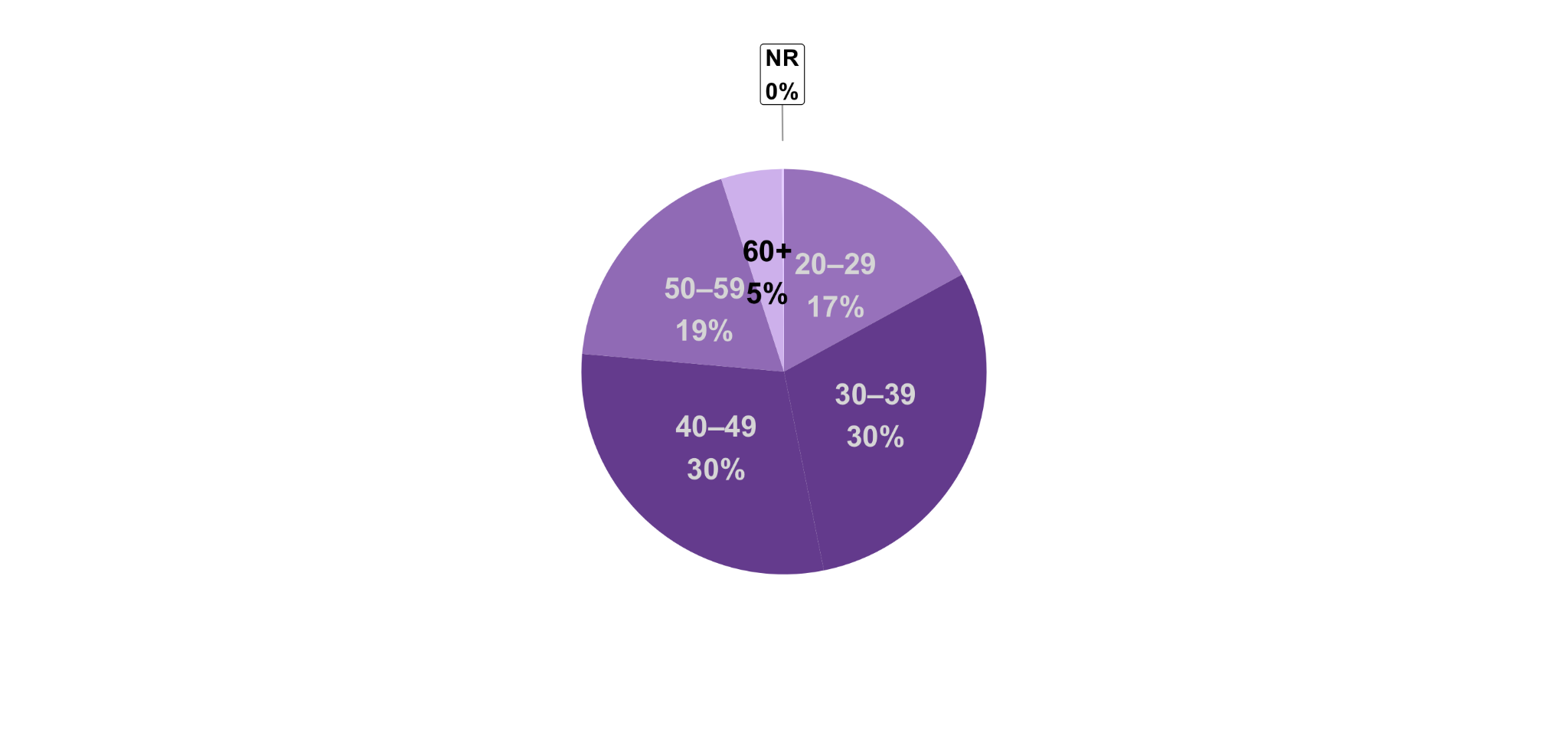
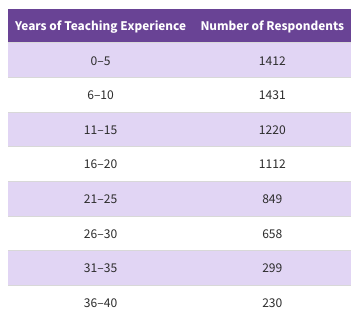
In addition, the 2025–2026 survey collected demographic information reflecting teachers' age and teaching experience. Unlike grade and subject, teachers provided only a single response.
As such, this study captures the perspectives and experiences from a very broad range of global PreK–12 classrooms, creating a unique opportunity to deeply examine the evolution of teaching, learning, and technology.
Technology Access in the Age of AI
Examining student and teacher access to Apple devices, peripherals, and AI-based tools.
+
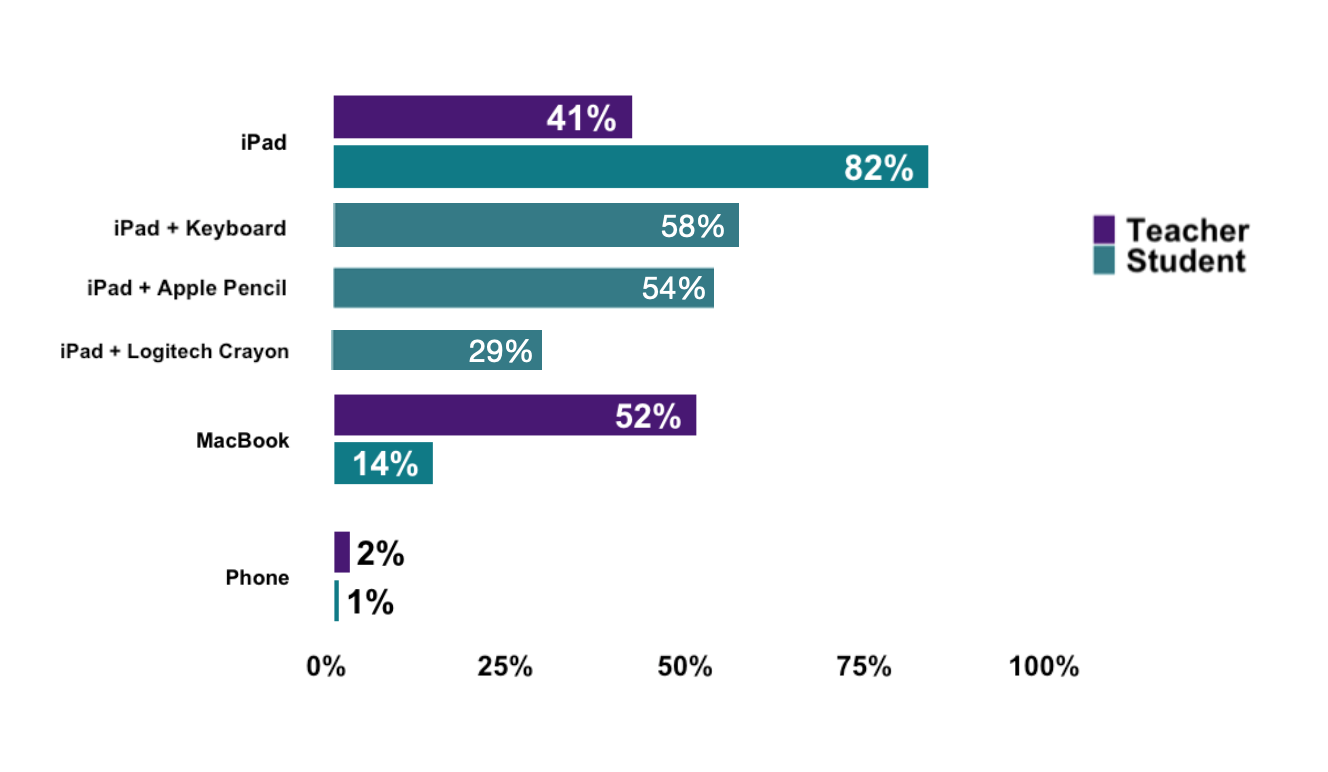
Several studies have documented trends in educational technology. In this inquiry, every participating school represents a setting where students had access to one-to-one Apple technologies. Although the difference between Apple and non-Apple tools or between shared access and one-to-one access cannot be directly explored, the 267 participating school settings presented here highlight a wide range of learning conditions. Across the 2025–2026 results, 41% of participating teachers reported using the iPad as their primary tool, compared with 82% of their students. Additionally, the survey captured student access to additional tools like Logitech Crayons (29%), Apple Pencils (54%), or external keyboards (58%) in iPad settings.
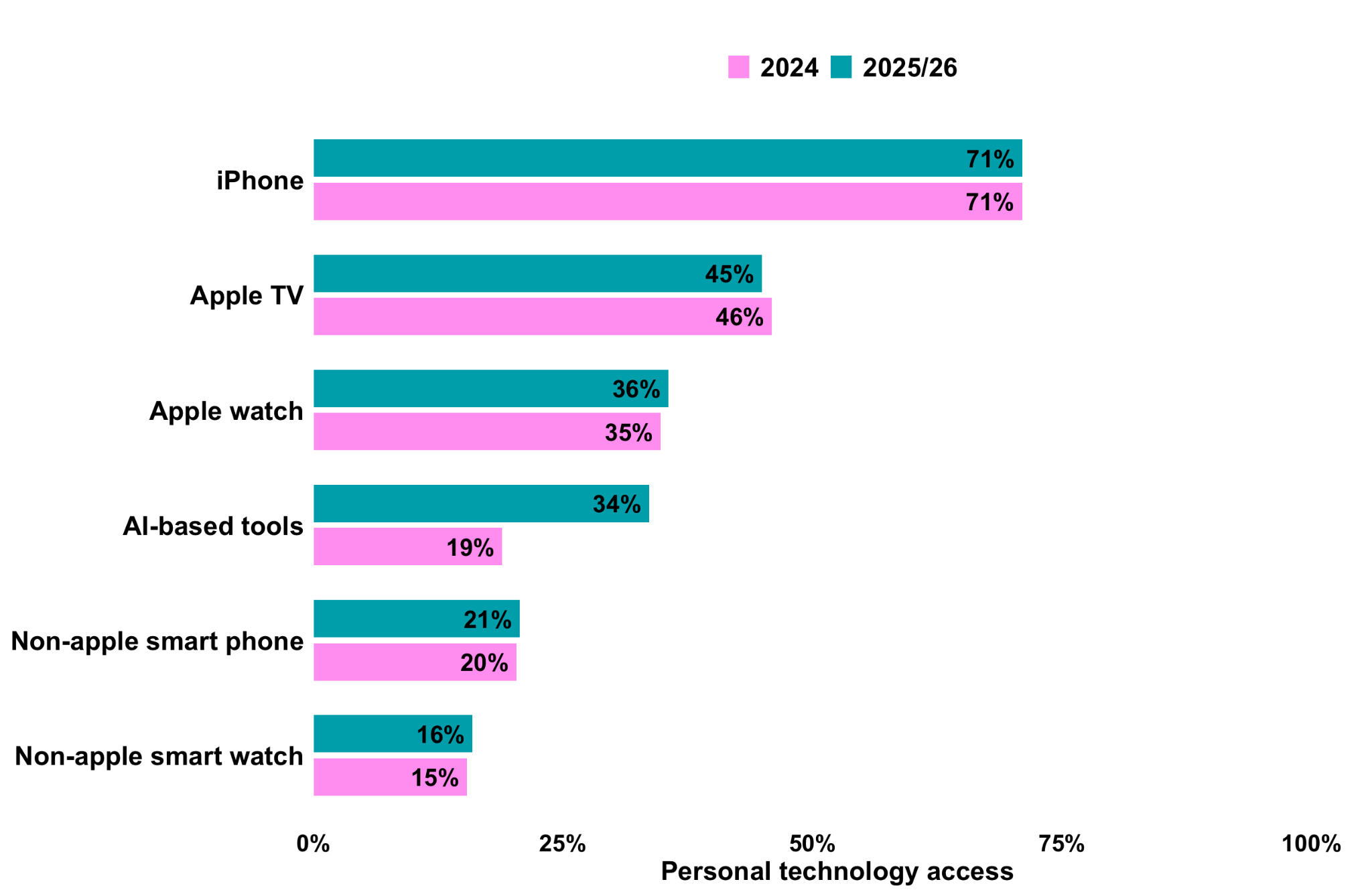
In addition to the school-supplied learning tools, teachers reported their personal access to various technologies (which are often employed for educational and professional purposes). Over 70% of teachers reported access to an iPhone, about one in three reported access to an Apple Watch, and close to half of all respondents had access to Apple TV. While access to most resources went essentially unchanged since initially queried in 2024, teachers reported a substantial increase in their personal access to AI-based tools (from 19% to 34% of all respondents) in 2025–2026.
Teacher Beliefs Towards AI
Analyzing educators' perceptions of AI's educational value and its anticipated impact on student learning.
+
Teacher beliefs are often framed as moderators of practice in educational scholarship. Decades of research has demonstrated the importance of teacher attitudes and beliefs in the successful adoption and use for any emergent technology or educational reform effort (Fisher, 1989; Hiebert et al., 1989; Bebell & O'Dwyer, 2010; European Commission, 2013, 2019). Teachers who believe that technology supports inquiry, autonomy, or higher-order thinking are more likely to implement practices aligned with those goals (Bebell & Burt, 2025; Burt & Bebell, 2026). Conversely, teachers with more limited views of technology may use it in narrower or more procedural ways.
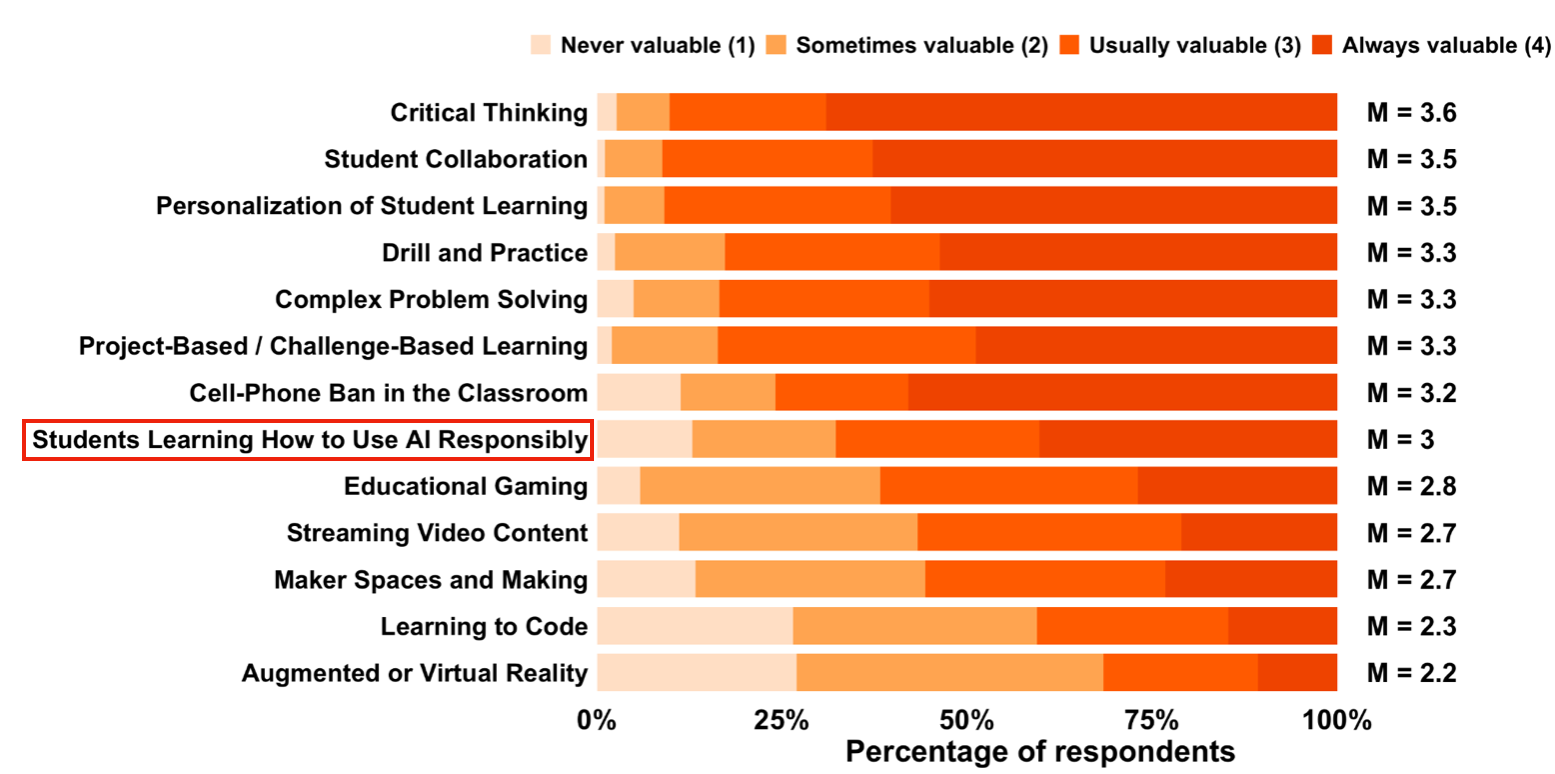
Building on this line of research, the Apple Distinguished Schools survey has included items examining teachers’ perceptions of AI’s educational value and the importance of students learning to use AI responsibly. The 2025–2026 results below summarize teachers’ beliefs about a range of pedagogical practices and opportunities, including the value of “students learning to use AI responsibly,” across the full study-wide sample.
Overall, ADS teachers were generally quite positive about the educational value of most surveyed practices, but variations across the global sample provides opportunity for examination. Across all responding grade levels and subject area teachers, “critical thinking,” “student collaboration,” and "personalization of student learning” were found to be the most universally valuable educational practices. Practices found to be less valuable across all teachers are shown in the bottom of the figure and include activities like "augmented or virtual reality” and "learning to code.” Between these extremes, “students learning how to use AI responsibly” was observed to be at least “sometimes valuable” by the vast majority (87%) of responding teachers (while 40% responded “always valuable”).
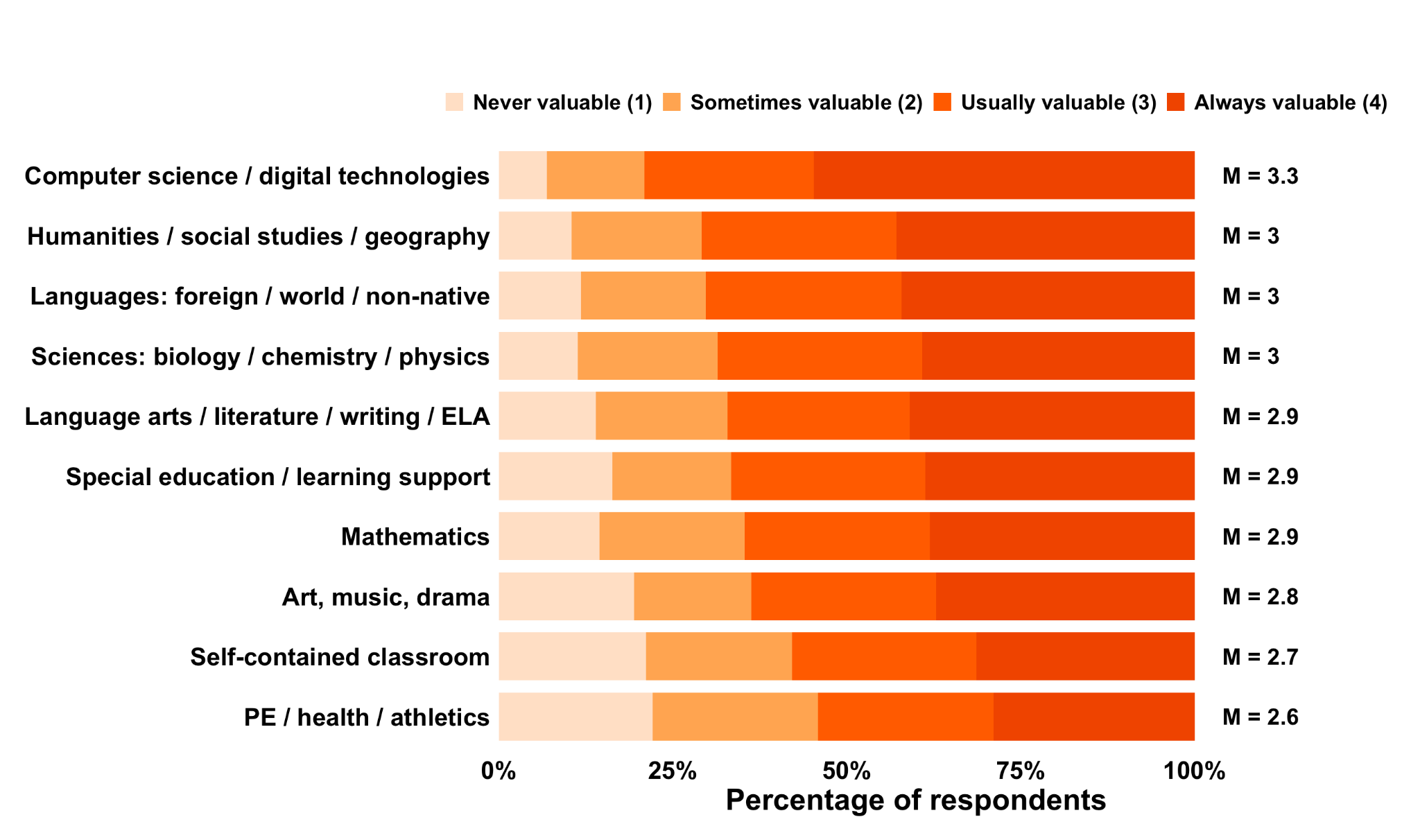
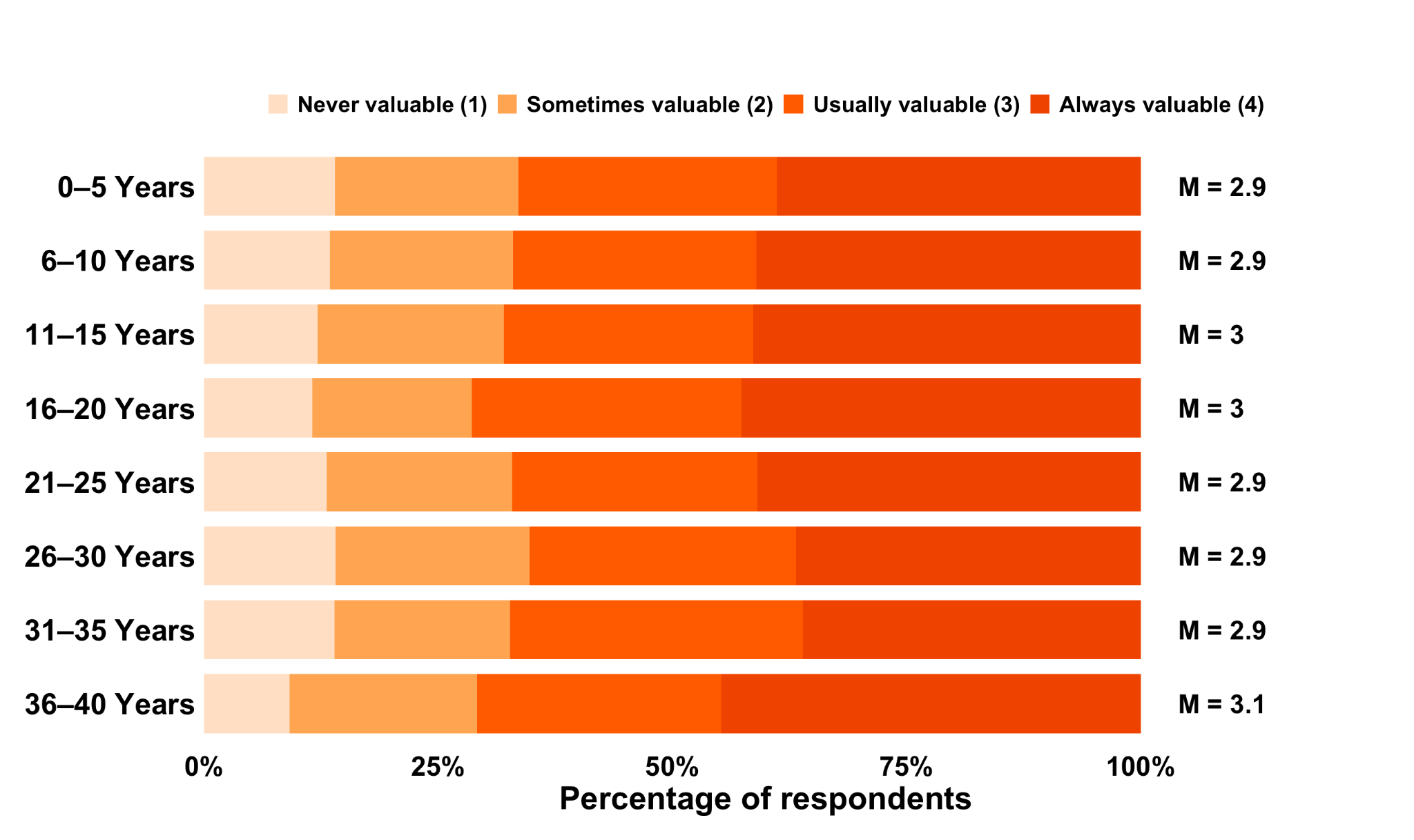
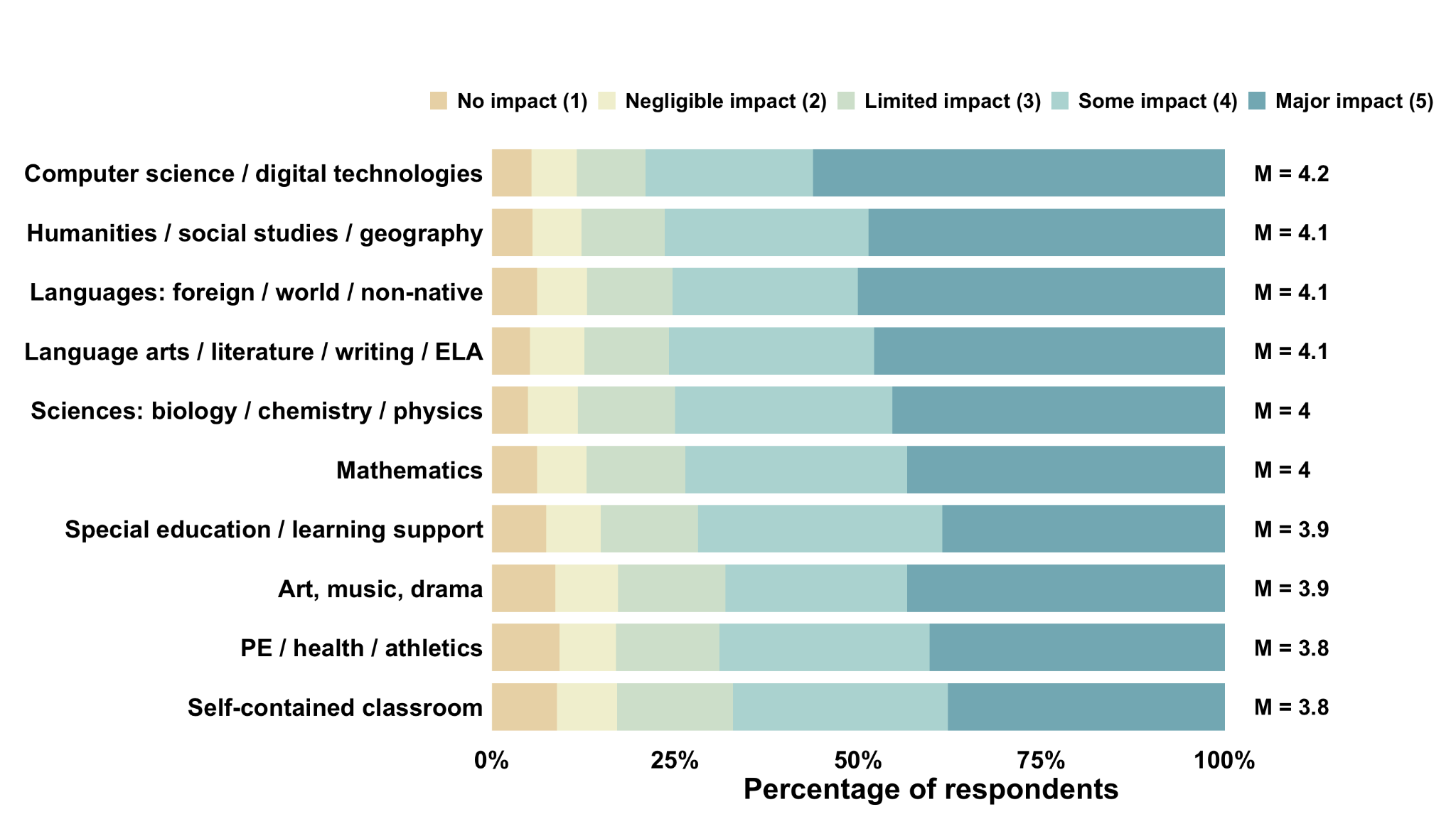
Looking across teacher’s grade levels, teacher belief on the value of “students learning to use AI responsibly” increases steadily across grade levels from early years through grade 7 where it remains consistent across middle and high school, with close to half of teachers reporting “always valuable.” Across subject areas, teachers serving self-contained elementary classrooms exhibited some of the lowest relative beliefs while teaching subjects like computer science, humanities, and world languages exhibited some of the strongest teacher beliefs.
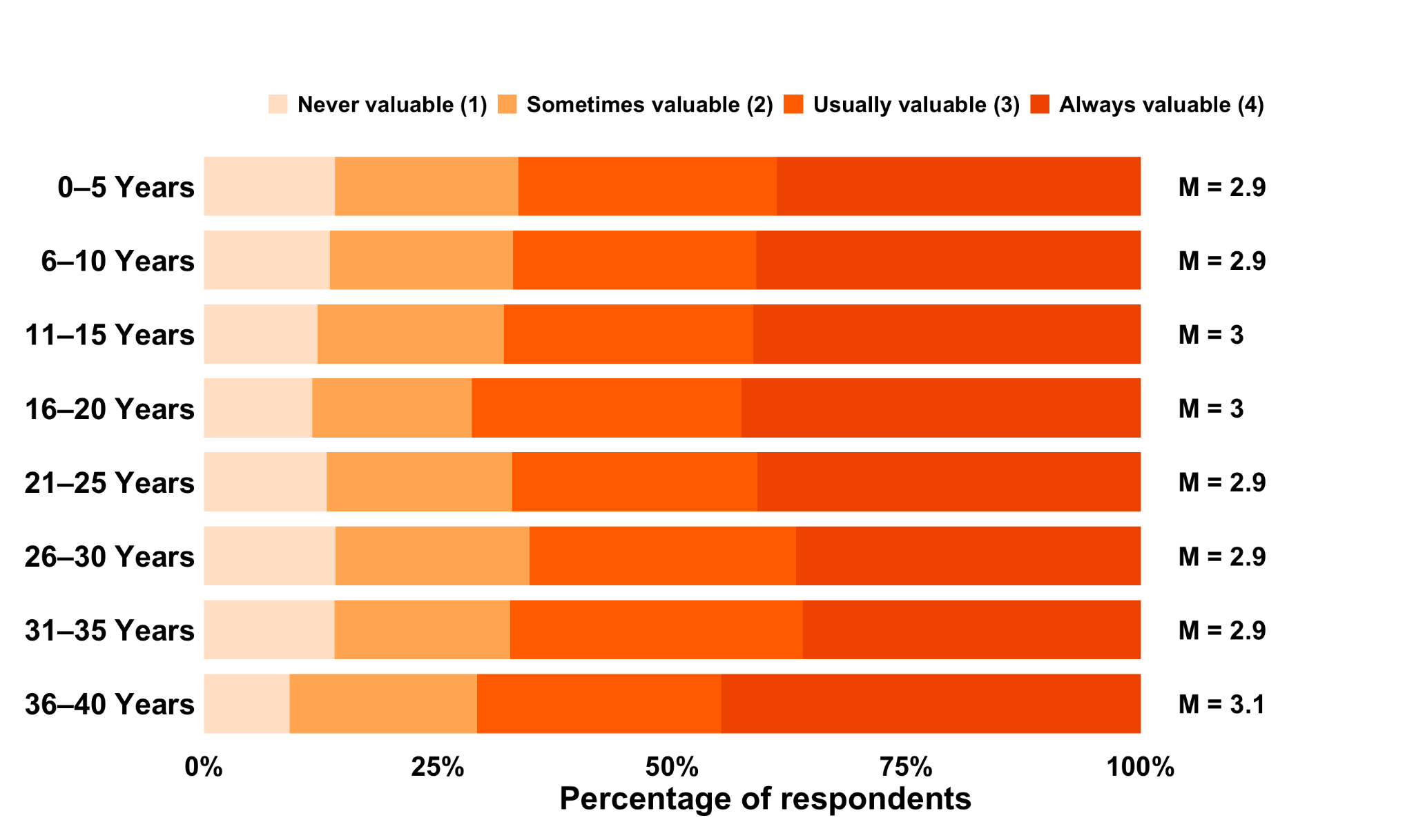
Notably, the 2025–2026 results show that is was often older and more experienced teachers reporting the strongest belief in the educational value of students learning to use AI responsibly.
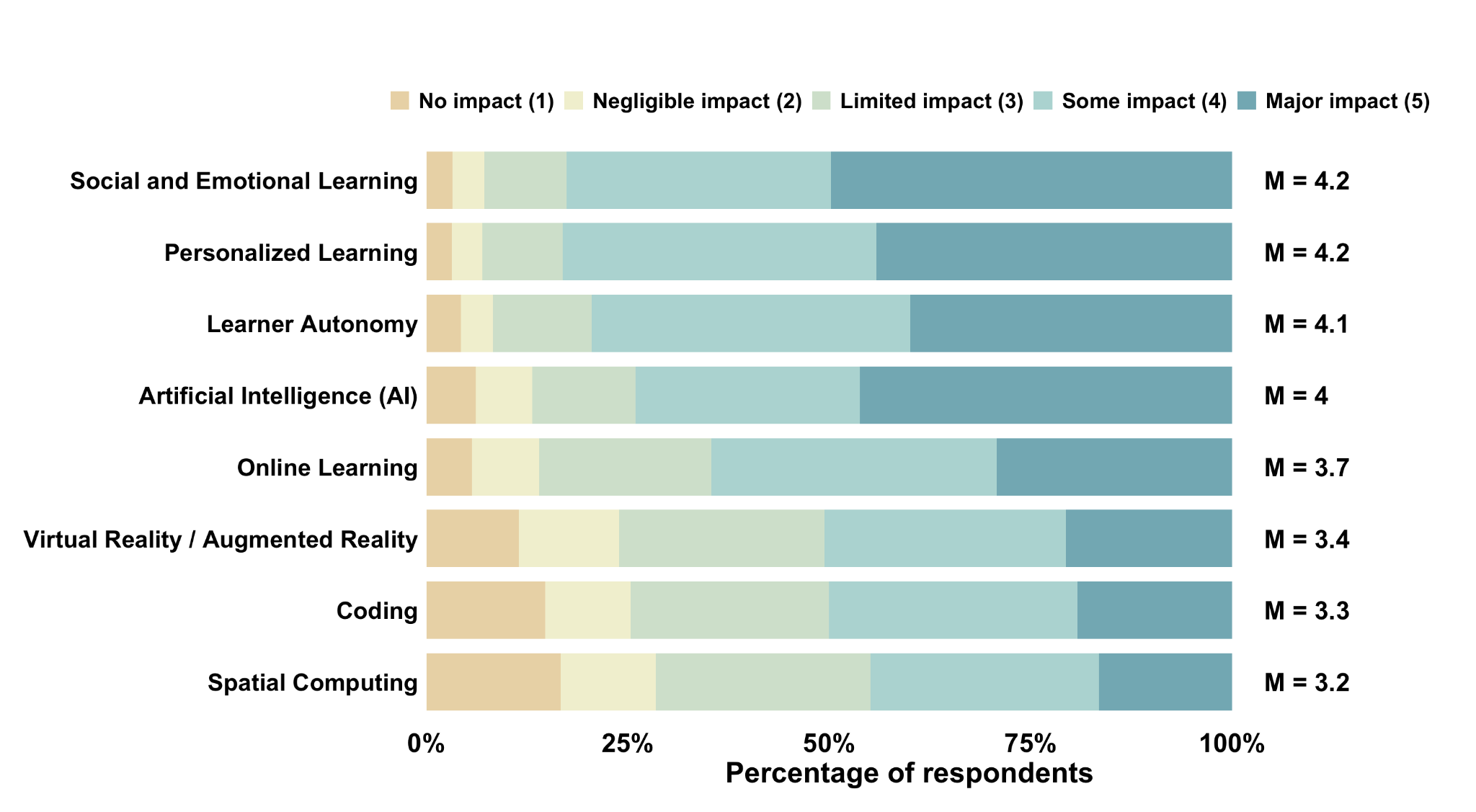
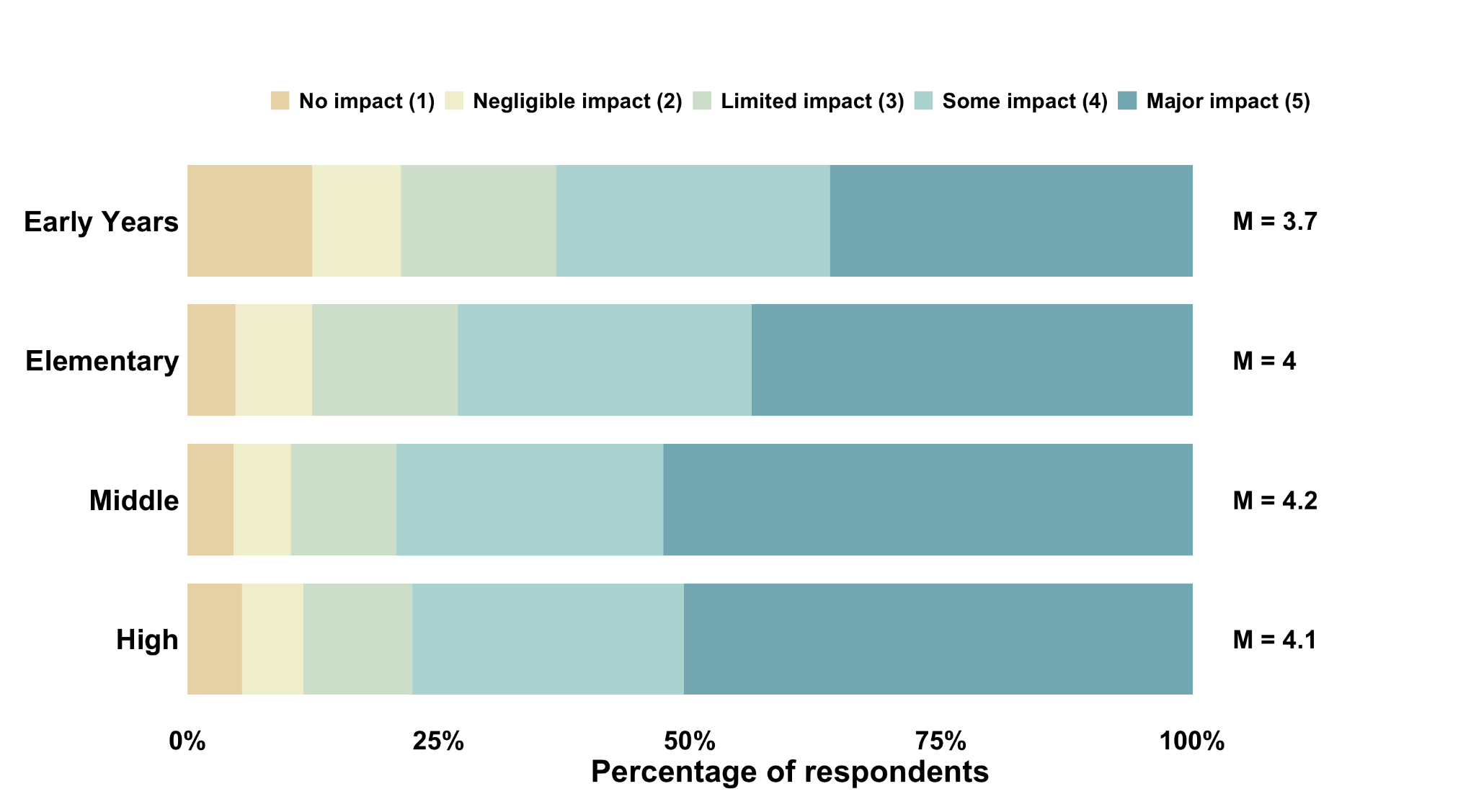
Teachers also evaluated AI’s potential impact as part of a broader set of educational practices and tools. The figure below shows how teachers in the 2025–2026 study-wide sample perceived AI’s impact relative to other approaches, including the value of students learning to use AI responsibly.
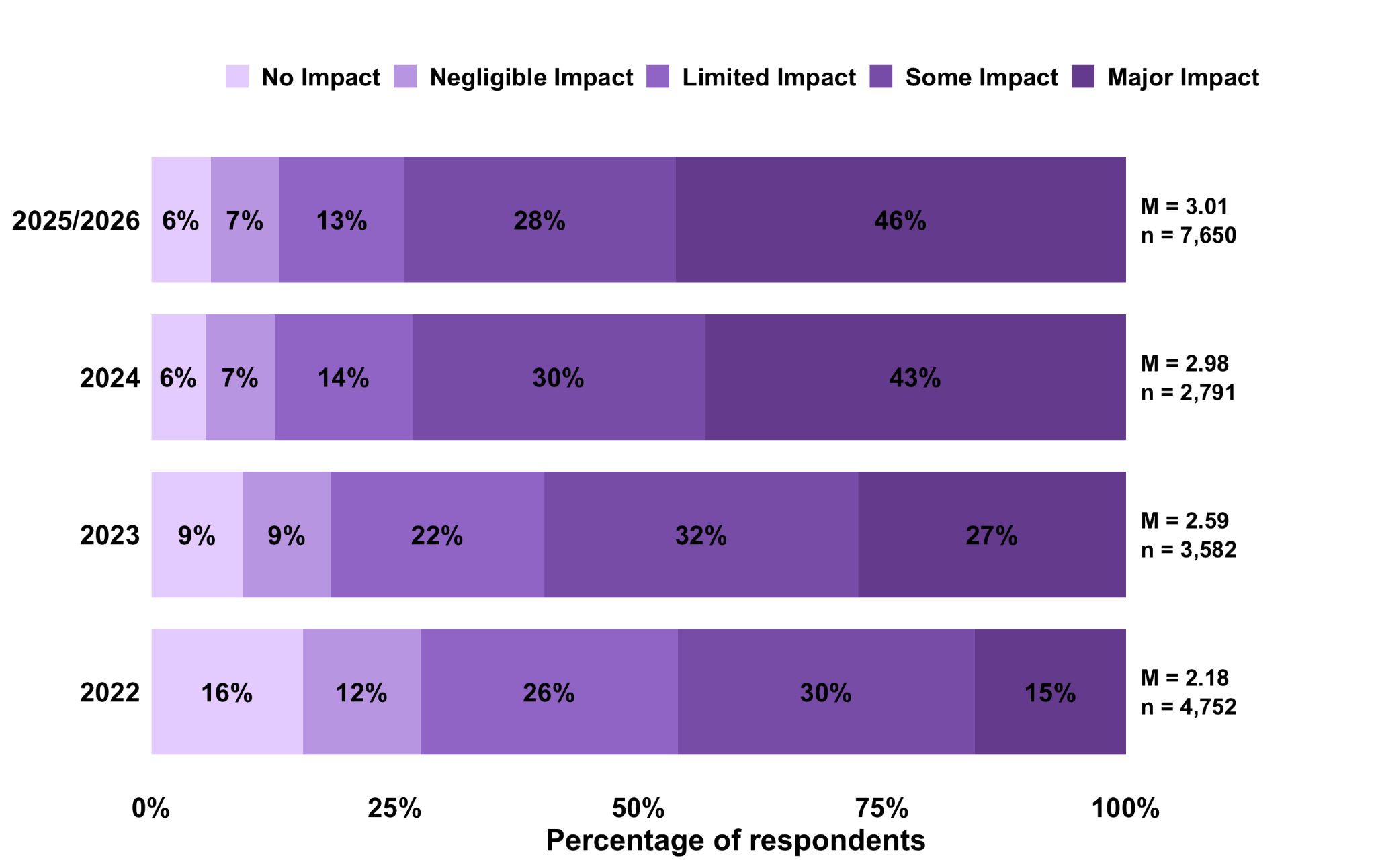
Overall, most teachers expected AI to affect their students’ learning in the future, with 46% anticipating a major impact and 28% anticipating at least some impact. Only 6% reported that AI would have no impact. Relative to other educational approaches and tools, teachers rated AI’s potential impact at levels like long-established priorities such as social and emotional learning, personalized learning, and learner autonomy. However, beliefs varied by grade level as middle school teachers reported the strongest expectations for AI’s impact, while early years teachers reported significantly lower expectations.
Examining prior (2022–2024) ADS Snapshot Study data affords a better appreciation of how teacher views towards the potential of impact may be evolving over time. Teacher views on AI’s potential impact have been tracked since the 2022 survey administration. The figure below shows how these views have shifted across four years of ADS Snapshot Study data.
Note. Sample size represents the # of teacher responses per year
These longitudinal results show a marked shift in teacher sentiments from 2023 to 2024 where nearly three quarters of all teachers reported AI would make a “major impact” or “some impact.” Teacher beliefs about the impact of AI have since remained stable over the past two years, indicating the biggest shifts for most teachers' AI beliefs occurred before the 2025–2026 school year.
Teaching and Learning Practices in the Age of AI
Documenting how frequently teachers and students leverage traditional technologies and emerging AI tools.
+
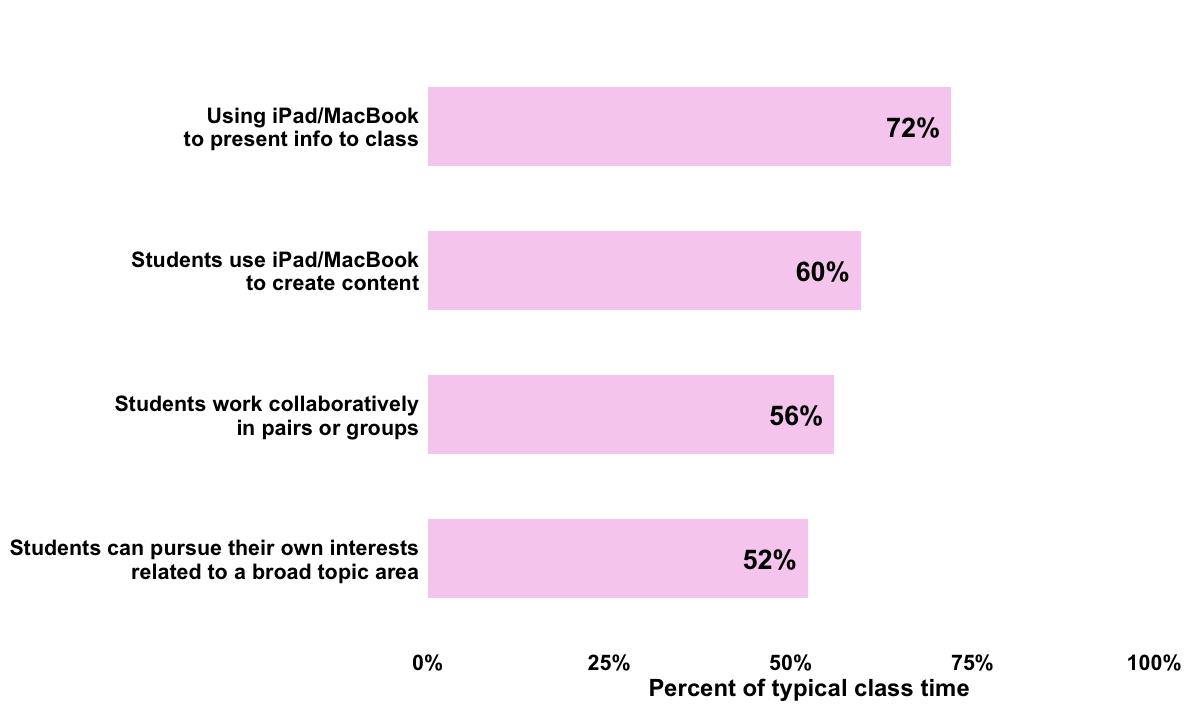
In addition to teacher beliefs, this study also seeks to portray the broad perspective of global PreK–12 education through an examination of the variety and frequency of current learning practices and uses of educational technology. To begin, all participating grade levels, subjects, and countries were combined to summarize the percent of typical class time (0-100%) a variety of non-mutually exclusive learning conditions occurred across all setting.
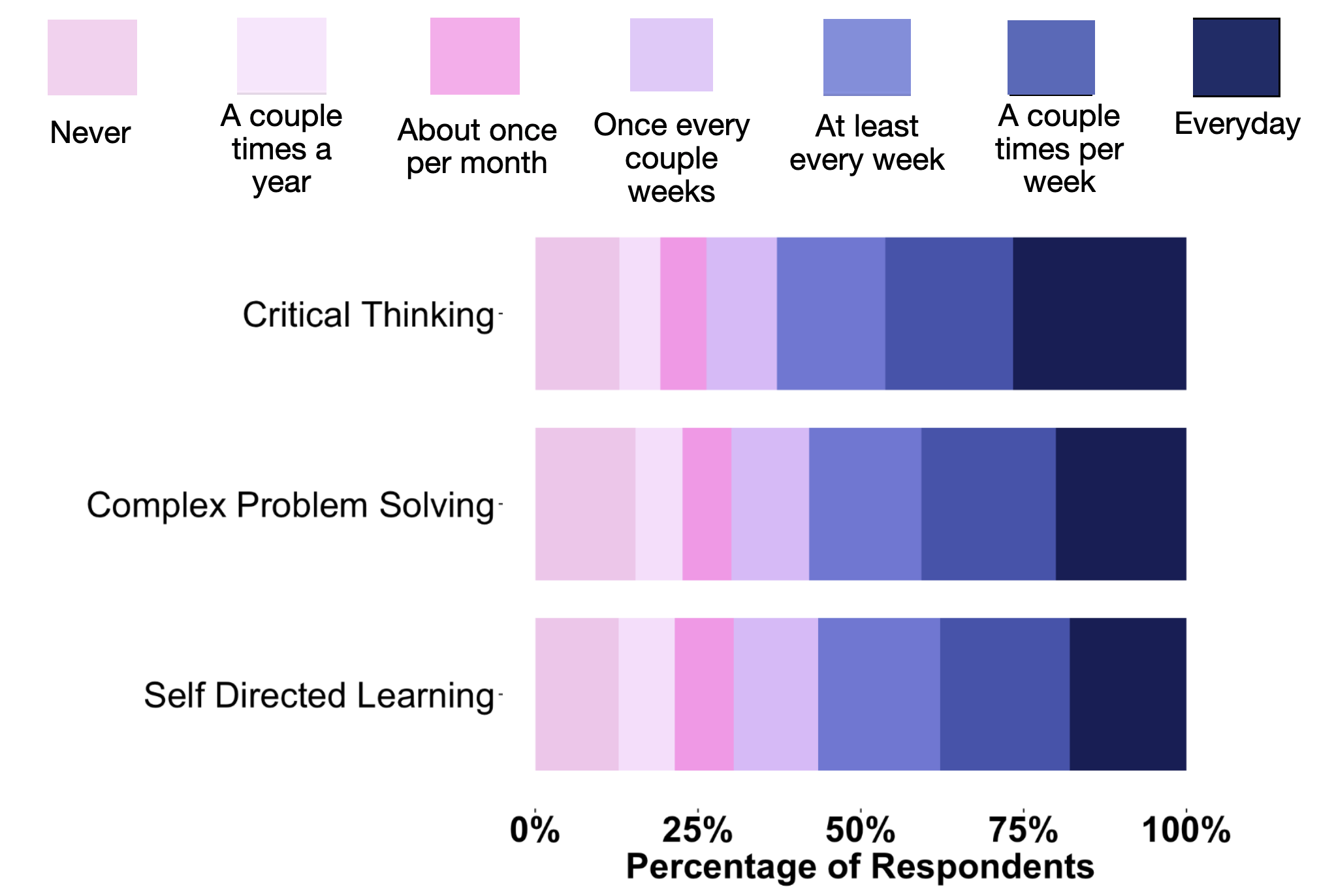
Like prior research in this community, teachers' use of technology for delivery of instruction and presenting information remained one of the most universal and widely occurring classroom practices, while students' use of technology to create content was also frequently cited across settings. Irrespective of technology, the global sample of teachers reported that more than half of class time often included opportunities for students to “work collaboratively in pairs or groups” and “pursue their interests related to a board topic area.” Recognizing the broad range of experiences from more than 8,000 teachers spanning all grades and subjects across the globe, the visual breakdown below begins to demonstrate the range of classroom practices. For example, across the 2025–2026 survey, teachers shared how frequently their students engaged in practices like critical thinking, complex problem solving, and self-directed learning.
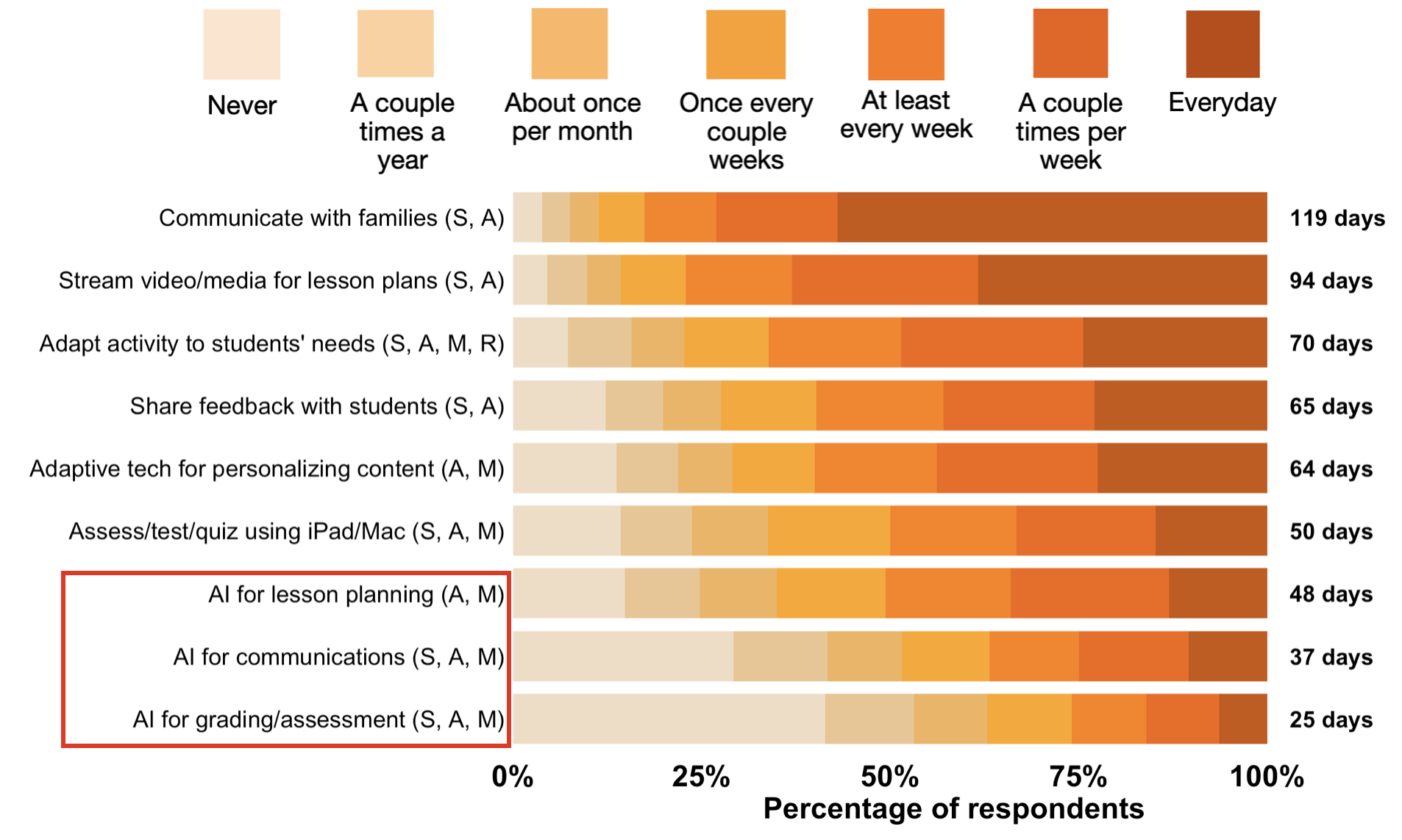
The study sample provides an opportunity to explore how teachers and their students currently leverage technology across a wide range of tools and objectives (including AI). First, a summary of the teacher practices across the global sample places the most frequently occurring practices at the top of the figure and least frequency teacher practices at the bottom. With a sample including every grade and subject level across PreK–12 education, the average frequency across all teachers is also displayed to estimate the number of days each practice occurred across the 2025–2026 school year (assuming 180 days).
Like prior studies, it is noteworthy that teachers used technology to support a wide range of educational goals. Teachers' communication with families was the most universal educational technology practice while teachers' use of technology for accommodations and adaptive practices were also quite widespread across all grade levels, subject areas, and countries. To better aid in the interpretation of each surveyed teacher practice, estimates are included for the SAMR levels most typically associated for each practice.
Collectively, much of teachers' use of technology fell under the Substitution and Augmentation categories. S and A levels typically provide benefits of efficiency and scaling like using technology for communicating with families or using iPads for assessment, but often short of the more pronounced academic benefits associated with Modification or Redefinition level practices. Examining the bottom of the figure, teachers shared how frequently they leveraged three common AI enhanced practices in their professional teaching practices.
Across the entire global sample, use of AI for lesson planning was the most widespread teacher practice with AI. More than 80% of teachers reported using AI for lesson planning during the school year while more than half reported using AI for lesson planning at least weekly (averaging 48 days per year, per teacher). Following decades of research showing the prevalence of teachers' general use of technology for communicating with students' parents, teachers reported widespread use of AI for communications. About 70% of the responding teachers reported using AI for communications at least once during the 2025–2026 school year (averaging 37 days per year, per teacher). The third and least widespread AI practice was teachers' use of AI for grading or assessment. With a global average estimated at 25 days per school year, over half of ADS classroom teachers across all grades and subject areas used AI for grading or assessment at least once over the past school year.
Continuing this exploration of worldwide teaching and learning, student uses of technology are estimated and portrayed below across all grade level and subject area respondents.
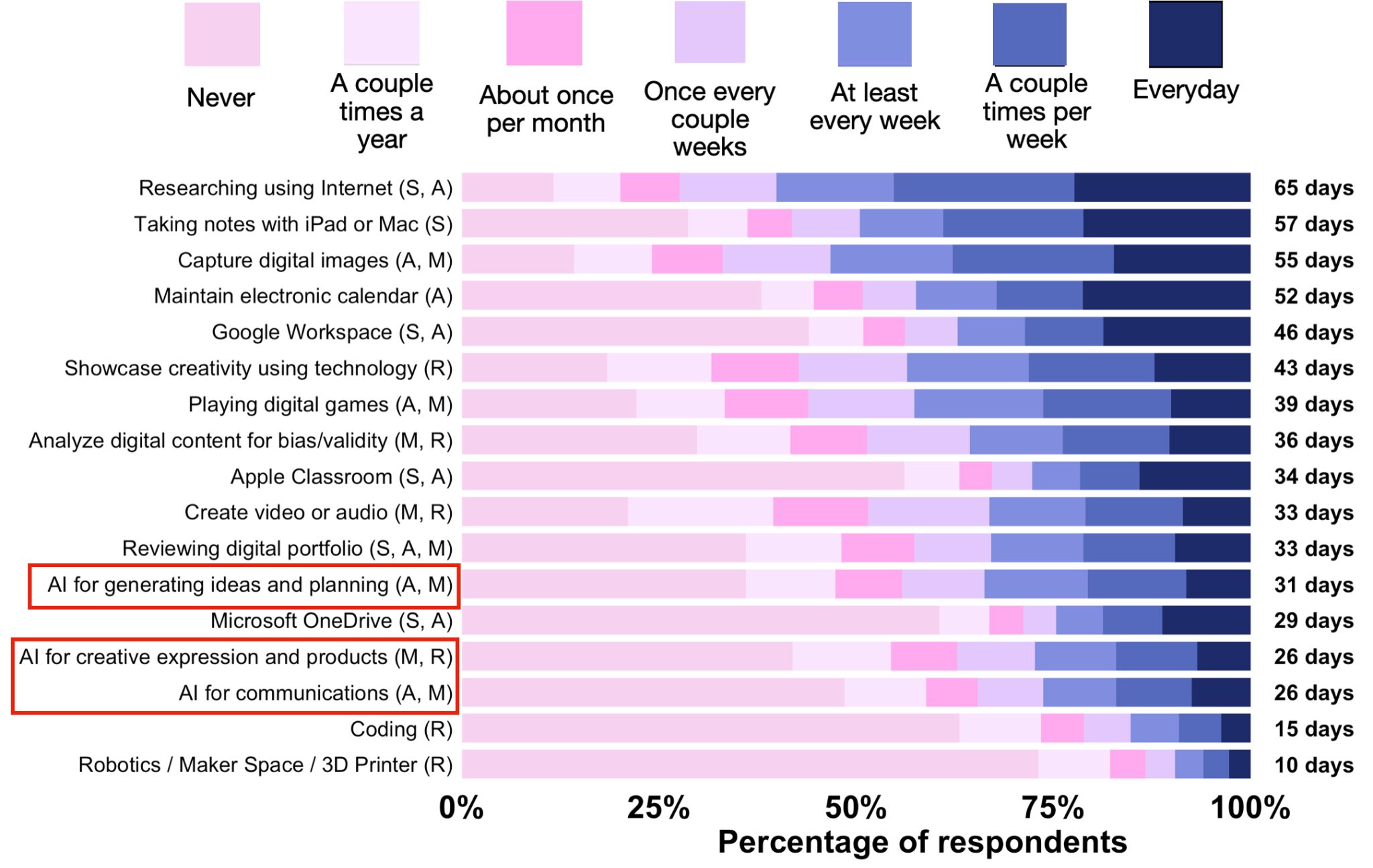
Looking across all classroom settings, the most common student technology practices in 2025/2026 were using an iPad or MacBook to take notes, maintaining an electronic calendar, and research using the internet while activities requiring more infrastructure and planning such as coding, using robotics, maker spaces, and 3D printers occurred less frequently.
In contrast to teacher practices, several of the surveyed student uses of technology have greater capacity for higher levels of SAMR, such as Modification or Redefinition. Although much of students' use of traditional educational technology has also been found to be Substitution and Augmentation-level practices, the sanctioned educational use of AI by students provides new and greater opportunity for higher level, Modification and Redefinition-levels of practices.
Exploring AI Trends Across Apple Distinguished Schools
Identifying how AI adoption varies by grade level, subject area, geographic region, and instructional pedagogy.
+
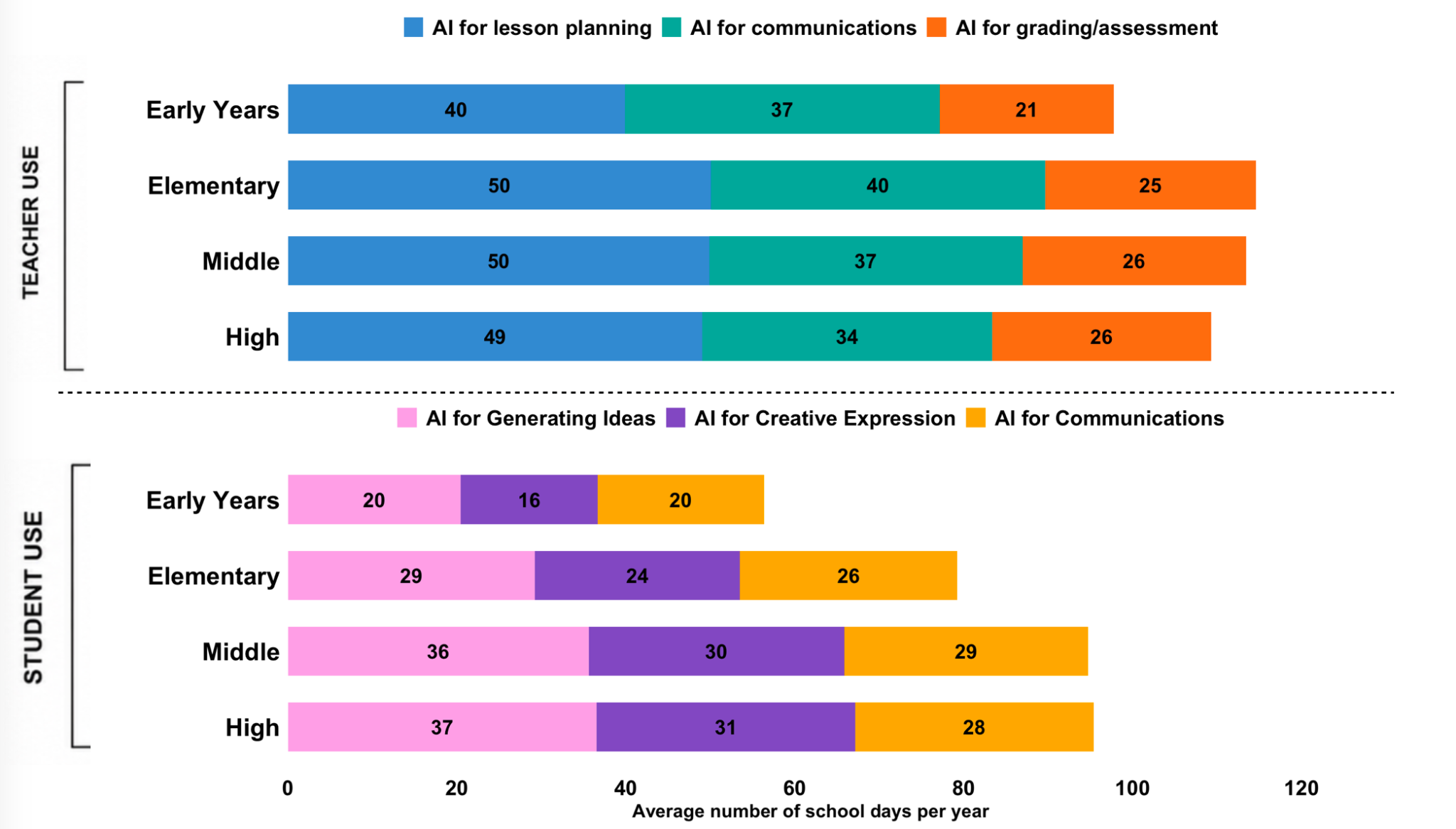
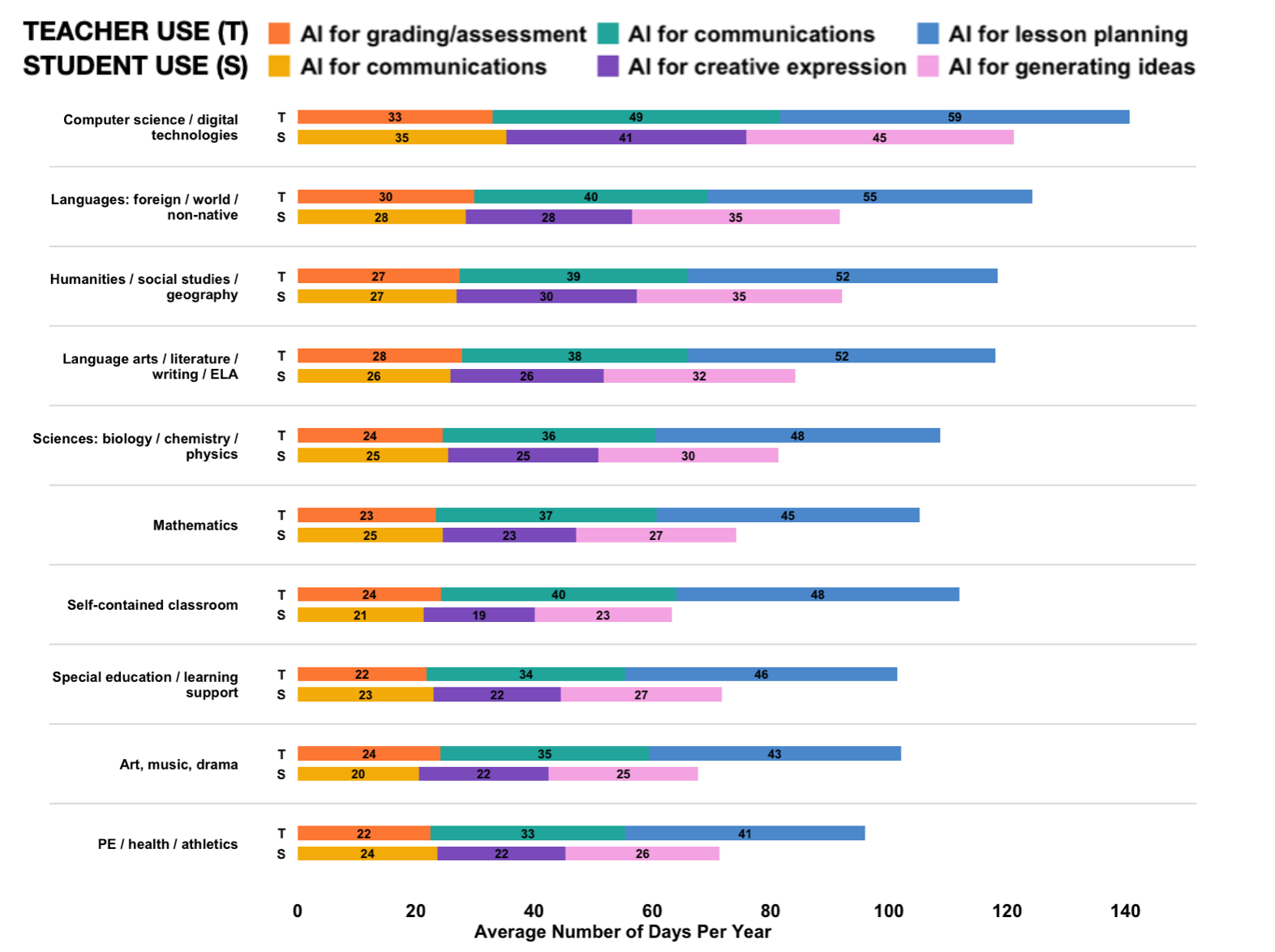
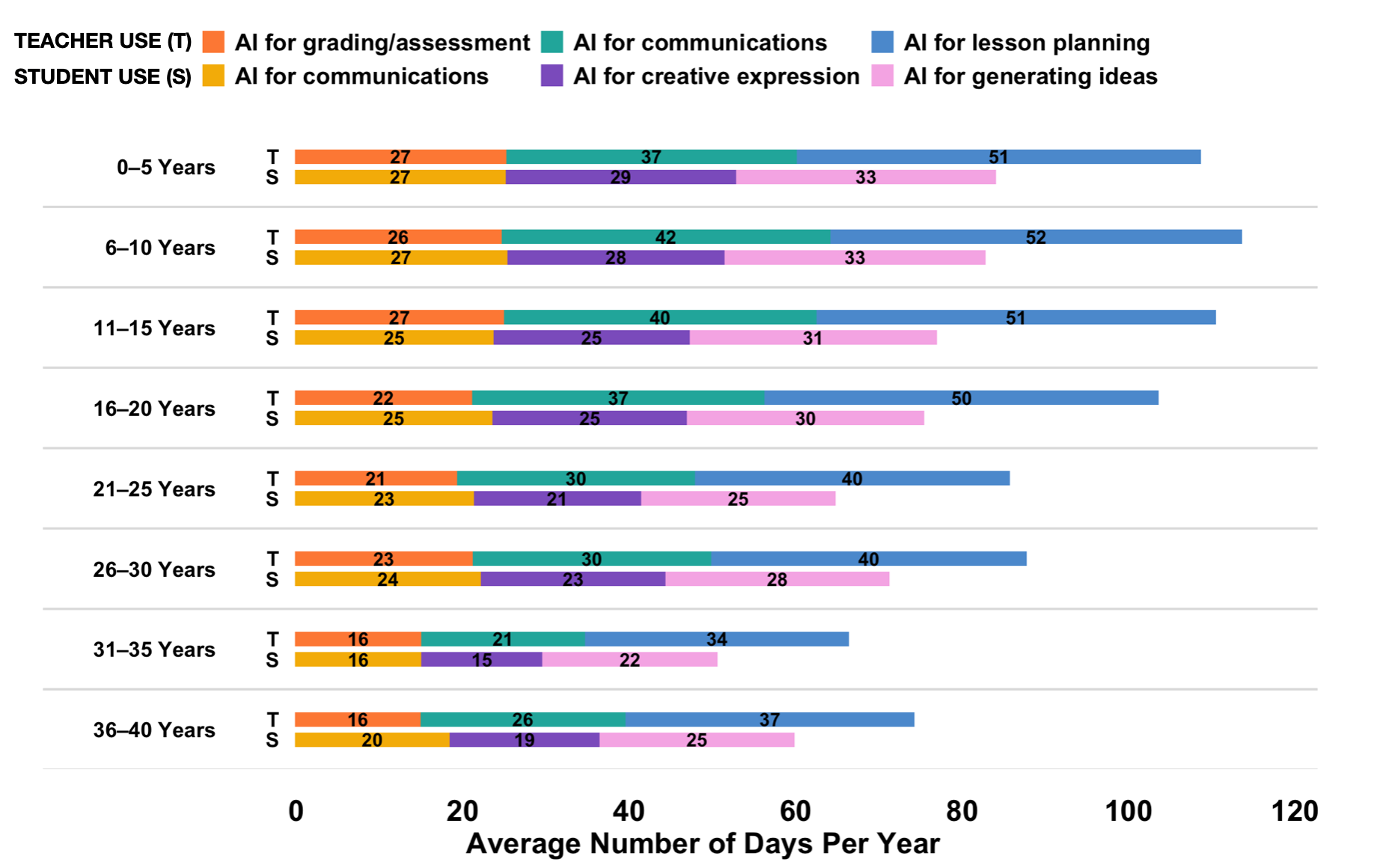
Collectively, the results show that most classroom teachers in ADS settings are evolving their teaching to include AI resources. As a collection of school communities focused on innovation, the 2025–2026 survey results help to portray how teachers adopt and leverage new technologies to support their teaching. As such, the following figures and table examine the adoption and use of AI tools across this diverse global sample, which also begins to address why some teachers today are using AI practices while others are not. First, teachers' use and students’ use of AI is explored by each school level and by teachers' subject specialty.
Across this diverse global sample, teachers serving elementary and middle school students reported the most widespread adoption and use of AI. It was noted that although elementary and self-contained teachers exhibited widespread use of AI for their teacher practices, their students exhibited notably less frequent use than upper grade and subject specific settings. After computer science teachers, foreign or world language teachers and humanities or liberal arts teachers reported the most widespread use of AI.
AI use varied by years of teaching experience in the 2025–2026 global sample. On average, teachers with 6–15 years of experience reported the most frequent AI use. Although the 30+ year experience group was relatively small, these teachers reported notably less frequent AI use than other surveyed teachers.
Although this study does not use the sampling frameworks or weighting needed for formal global comparisons, the international sample still allows for exploratory analyses of geographic and cultural variation. These analyses can help identify whether teacher practices and AI adoption patterns differ across contexts.
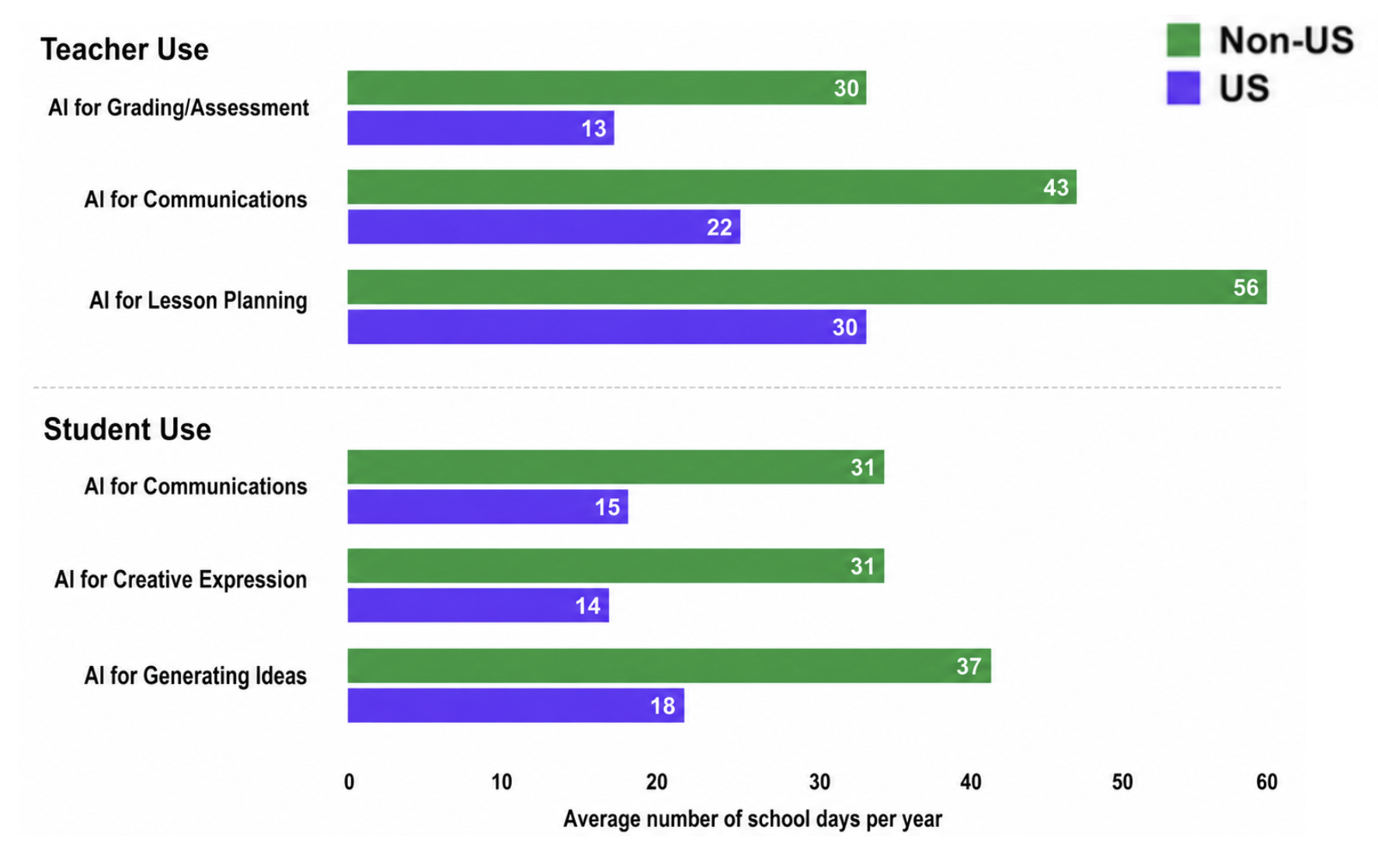
The 2025–2026 results point to a notable geographic pattern: teacher respondents from U.S. schools reported substantially less frequent AI use than teachers outside the U.S., even when grade level and subject area were held constant. However, this study does not use a design that can isolate the causes of national or geopolitical differences. For that reason, the finding is best treated as descriptive evidence of contextual variation rather than as a causal explanation. The analysis therefore turns to factors more directly within the locus of control of policymakers, school leaders, and teachers, including technology access, pedagogy, and beliefs.
Although technology access is a necessary condition of practice, all participating classrooms in the study had prior access to Apple devices. Examining local variation between students iPad and MacBook access, there were few observed differences in how teachers or students employed AI. However, students and teachers in classroom settings with iPads and access to keyboards, Apple Pencil, or Logitech crayon were associated with increased AI usage than settings without those peripherals.
Compared to variations in iPad or MacBook access, teachers and student AI use of technology was more closely associated with their other surveyed teaching and learning practices. For example, teachers who engaged their classes more frequently in pedagogically forward practices such as self-directed learning, critical thinking, and complex problem-solving were more likely to engage in AI practices. Self-directed learning, critical thinking, and complex problem-solving were all positively related to teachers’ and students’ use of AI.
Across all teacher and student practices, the strongest relationships with deeper pedagogies were observed for student practices, particularly using AI for generating ideas and planning and for creating expressive products. For example, students' frequency of self-directed learning practices exhibited statistically significant correlations with the frequency of AI-supported idea generation (ρ = .396), creative expression at (ρ = .392), and communication (ρ = .354). Critical thinking and complex problem-solving practices were also found to be positively associated with student AI use across the study wide sample. Correlations for AI use for creative expression and products ranged from ρ = .353 to ρ = .392, and correlations for use of AI for communications ranged from ρ = .260 to ρ = .354.
Instructional Practice
Self-Directed Learning
Critical Thinking
Complex Problem Solving
Teacher Use of AI
- Lesson planning
.287
.195
.205
- Grading and assessment purposes
.269
.153
.183
- Communications
.240
.126
.156
Student Use of AI
- Generating ideas and planning
.396
.352
.367
- Creative expression and products
.392
.353
.377
- Communications
.354
.260
.294
Across four common classroom practices in 2025–2026, each showed statistically significant relationships with the frequency of AI practices (p<.001). The frequency that teachers presented curriculum with an iPad or MacBook exhibited the weakest overall relationships with AI use of the four practices, ranging from ρ=.154 for AI-supported grading and assessment to ρ=.194 for AI-supported lesson planning. Student collaboration showed somewhat stronger relationships particularly with student uses of AI for generating ideas and planning (ρ=.246), creative expression and products (ρ=.264), and communication (ρ=.235).
Instructional Practice
iPad/MacBook to Present Info
Collaboration in Pairs/Groups
Pursue Own Interests
Create Content with tech
Teacher Use of AI
- Lesson planning
.194
.199
.235
.244
- Grading and assessment purposes
.154
.203
.235
.222
- Communications
.160
.202
.209
.176
Student Use of AI
- Generating ideas and planning
.180
.246
.276
.335
- Creative expression and products
.192
.264
.316
.365
- Communications
.168
.235
.274
.304
Across grade levels and subject areas, emerging AI use was most strongly associated with student-directed classroom practices. For example, the frequency with which students pursued their own interests was positively related to students’ use of AI for creative expression (ρ = .316), idea generation and planning (ρ = .276), and communication (ρ = .274). Students’ use of an iPad or MacBook to create content showed even stronger associations with AI use for creative expression and products (ρ = .365), idea generation and planning (ρ = .335), and communication (ρ = .304).
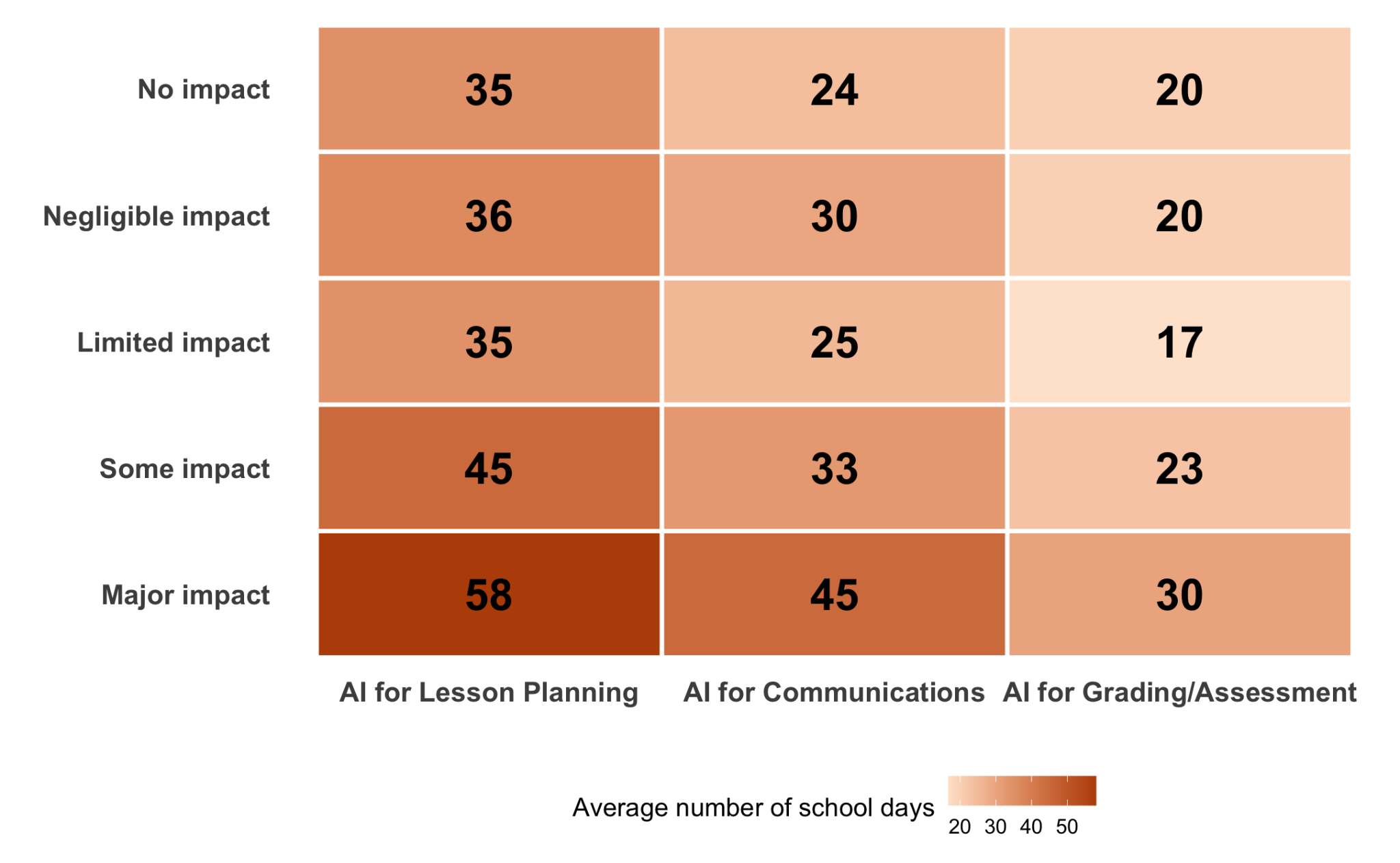
Concluding this examination of the teacher and classroom characteristics associated with emergent AI use, teacher beliefs about AI were examined in relation to AI practices across the study wide 2025–2026 sample. The heat map below shows the estimated average number of days over the 2025–2026 school year that teachers reported AI use for each category of AI belief.
Across subjects and grade levels, teachers who reported more frequent AI use also tended to report stronger beliefs about AI’s potential impact. Teacher beliefs were positively associated with all teacher AI practices, with the strongest associations appearing for AI use in lesson planning and communication.
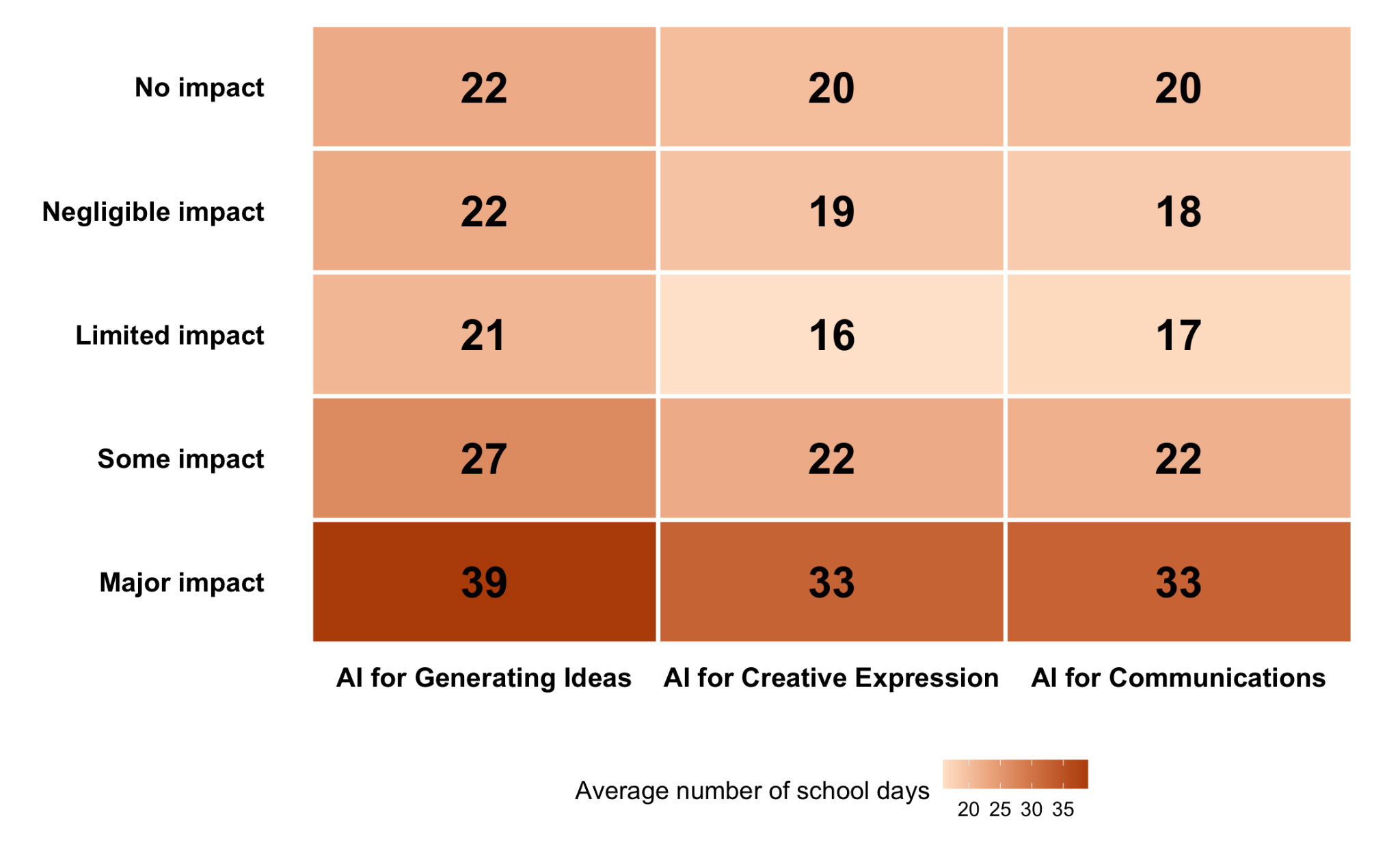
The second heat map below extends this analysis to students’ AI practices, showing the estimated average number of school days during 2025–2026 that teachers reported students using AI across each AI-belief category. Across the student practices, the most pronounced relationship between belief and practice was using AI to generate ideas, although all three student use patterns were statistically significant.
Teaching and Learning Practices and Student Engagement
Investigating the positive associations between richer pedagogical practices, constructive technology use, and higher student engagement.
+
Prior results showed a consistent, positive association among deeper pedagogy, classroom technology use, and student engagement. These relationships were strongest when students actively used technology themselves, rather than when teachers used technology primarily to deliver instruction. Given global concerns about declining student engagement, especially as students grow older, it is valuable to identify those universal classroom conditions and practices associated with higher engagement (Bebell & Burt, 2025).
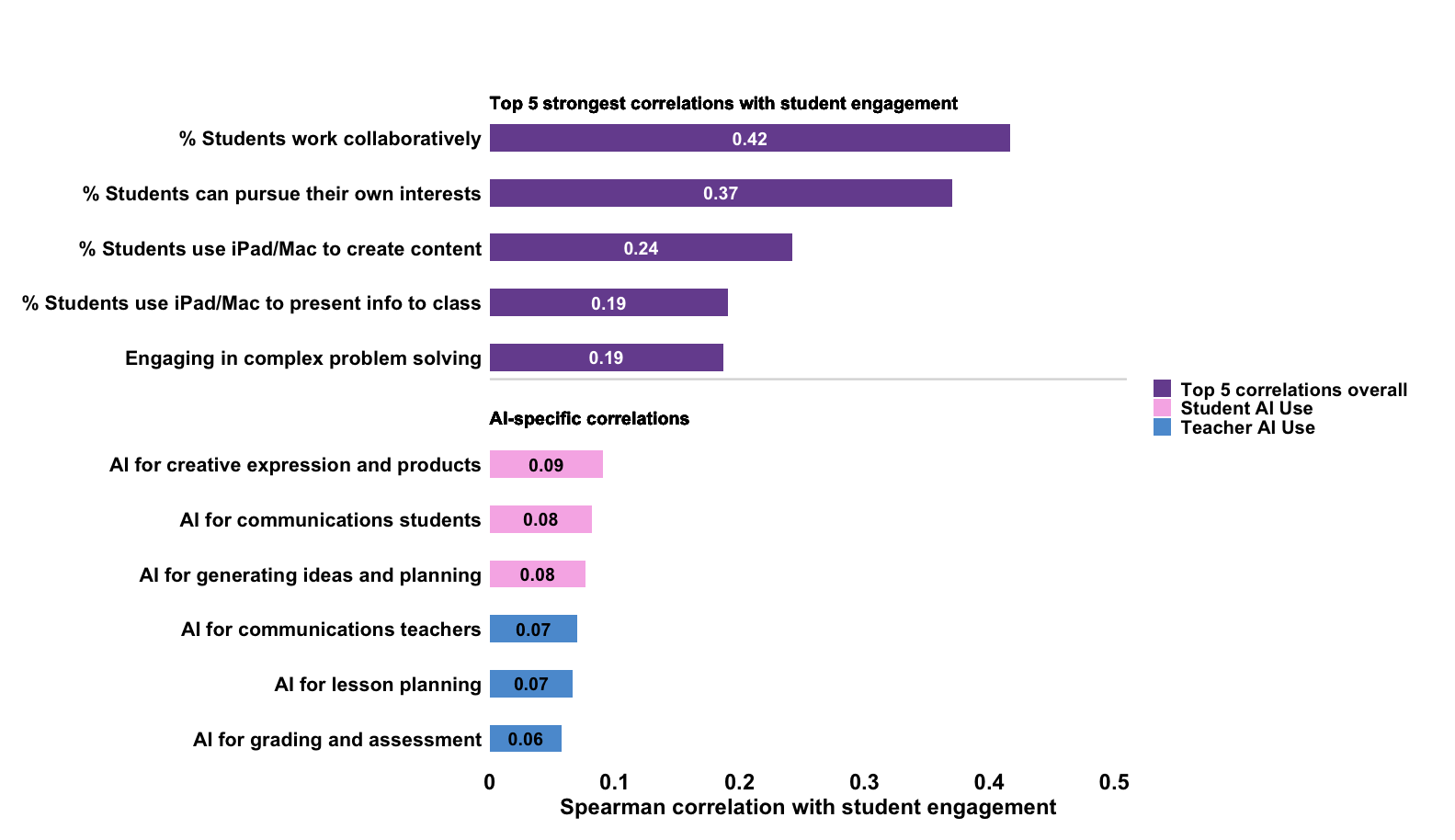
The figure shows the relationship between practices that were most associated with student engagement across the study wide 2025–2026 results. Replicating prior ADS research findings (Bebell & Burt, 2025, Burt & Bebell, 2026), the current results found that richer pedagogical practices were more often related to classrooms with more frequent technology use, deeper levels of student engagement, and higher order thinking. Student collaboration (irrespective of technology) and students’ ability to pursue their own interests remained the most universal practices associated with increased engagement (r=.42), while teacher use of technology to deliver content (r=.19) and student use of technology for content creation (r=.24) remained statistically significant positive predictors of student engagement across all grade levels and subject areas.
Study wide, not all technology practices showed significant relationships with student engagement. For example, although student notetaking with technology was one of the most commonly reported daily classroom activities, its association with student engagement was weak. This pattern highlights an important distinction between routine technology use and the deeper classroom practices more closely associated with higher levels of student engagement. For the first time, the relationship between teachers and students AI use was examined in the context of student engagement to show fairly weak, but all positive correlations. Of the six surveyed AI practices in 2025–2026, student use of AI for creative expressions exhibited the strongest relationship with student engagement (r=.09) while teachers use of AI for grading and assessment exhibited the weakest (r=.06).
A Deeper Look into AI-Enhanced Practices and Responsible Use
Analyzing thematic examples of innovative AI integration shared by educators.
+
Thus far, this report has examined teacher and student technology practices across a large global sample of classrooms. The remaining section takes a closer look at teachers’ open-ended descriptions of innovative classroom practices. These responses provide a more direct view of the AI-related practices emerging across grade levels and subject areas and offer a deeper opportunity to consider those practices through the lens of the SAMR model.
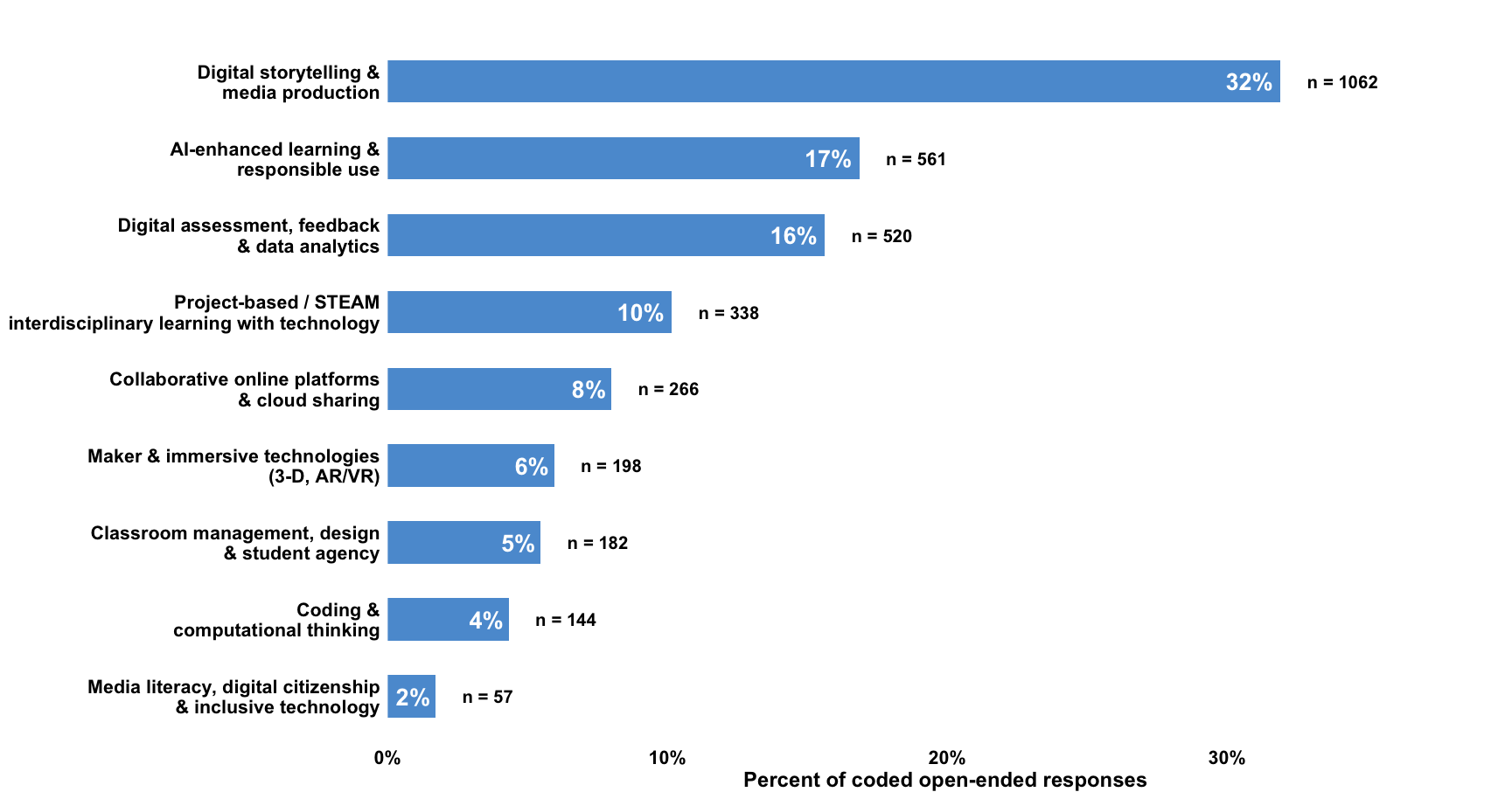
To support this analysis, open-response data was examined from 3,727 teachers who responded to the 2025–2026 ADS Snapshot Survey prompt: “Please share one example of an innovative practice from your classroom this past year.” Each response was coded into one of ten themes representing the most common ways teachers described innovative teaching during the 2025–2026 school year. Selected quotes are presented verbatim from the teacher survey.
Echoing past survey results of the ADS community, the most reported innovation using technology shared across all grade levels and subject area teachers was digital storytelling (32%). However, notably more unique to this year, 561 (17%) of all PreK–12, global teacher responses included AI in their example of innovative classroom practice. The following example of an innovative practice was shared by a middle school science teacher from Indonesia and was subsequently coded as an Augmentation level example of AI Enhanced Learning and Responsible Use:
"Students designed a lab to understand the length of the cell cycle in onion root cells. They used AI as another scientist that they collaborated with to design the experiment and interpret micrograph images (taken with iphone through microscope lens) of dividing onion root cells to collect and analyse data to answer their research question.”
A second example, coded as an Augmentation level practice was shared by a self-contained grade 1 teacher:
"I created via AI a script to incorporate our learning following our novel study. I then uploaded it to Schoolwork so students could have a digital script. AI also generated a black and white puppet (mouse, rat, and male/female narrator) for them to cut out and color and put on a drama for their classmates. This reinforced author’s purpose, understanding the elements of fiction and drama genres.”
In addition to examples of AI-related practices, teachers also shared hundreds of rich examples of how technology supports assessment, project-based learning, STEM learning, and collaboration. Given the current focus on emergent AI use, the authors more closely examined the 561 AI-related responses. First, a summary of all shared responses was created to encompass all shared examples of AI-related practices:
“AI Enhanced Learning and Responsible Use: Generative models (ChatGPT, Gemini, Claude, Canva AI, Suno) are employed not only for drafting content but also as prompts that challenge students to interrogate bias, plagiarism, and source credibility. Teachers scaffold responsible prompting while learners’ experiment with AI‑generated text, images, or music, then critically evaluate the output in light of ethical guidelines.”
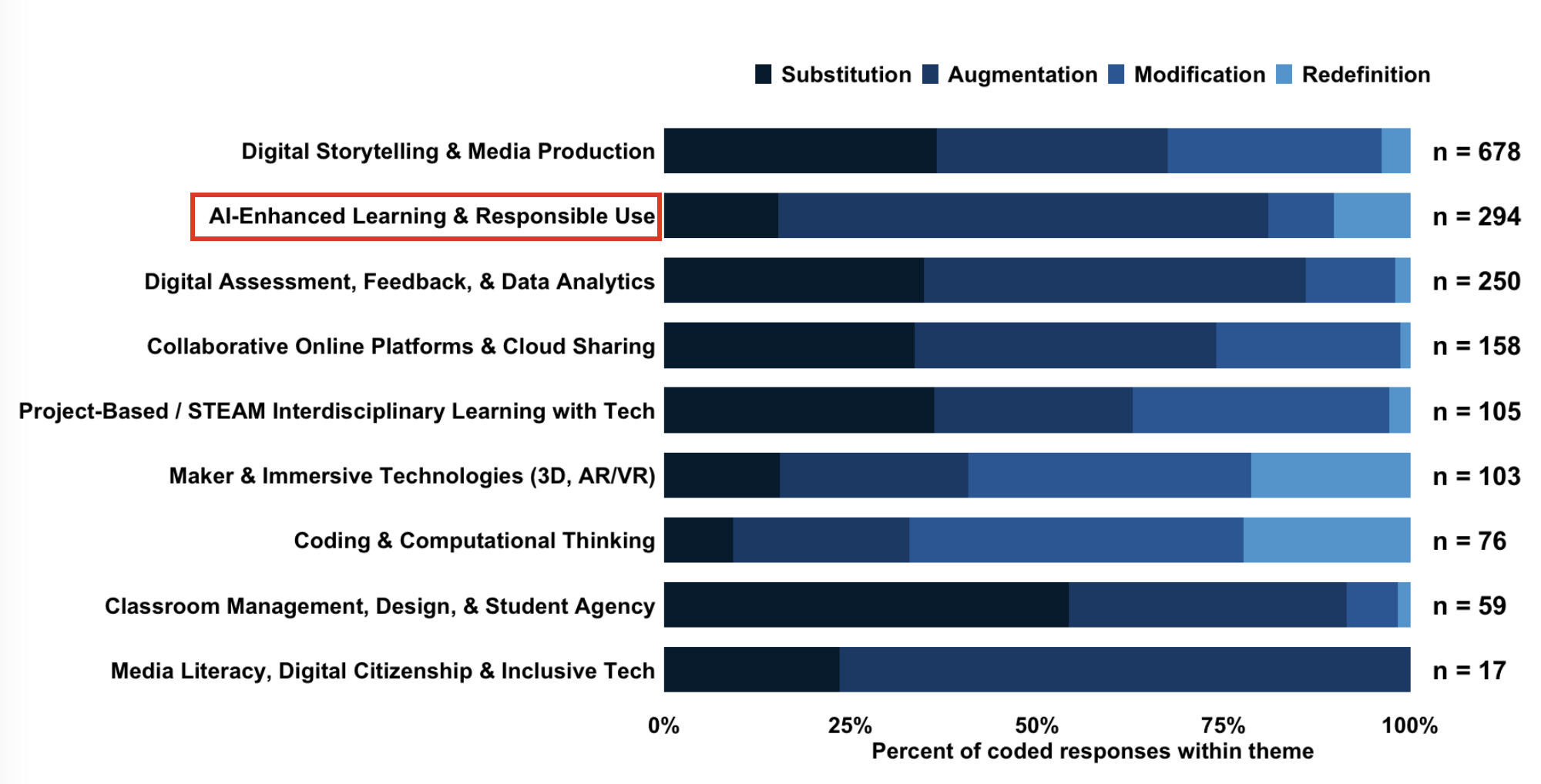
To allow for greater examination of SAMR levels across each innovative use category, teacher responses containing enough details of their innovative practice were further coded with an estimated SAMR level, including 294 “AI-Enhanced Learning and Responsible Use” examples.
Across the AI-Enhanced Learning and Responsible theme, 31% of the teachers' responses were classified as Substitution, 40% Augmentation, 23% Modification, and 6% Redefinition. Thus, most AI-related practices (71%) currently involve enhancing or extending existing practices, while 29% represent more substantial forms of instructional transformation. Echoing the study wide quantitative results, the open-response data found teachers and students are using AI both to streamline familiar practices and, in a smaller but significant number of cases, to support genuinely new teaching and learning practices.
The relatively smaller proportion of AI examples observed at the Modification and Redefinition levels compared with digital storytelling and media production is likely related to the substantially longer timeline for teachers and systems to develop applications. At the same time, the relatively broad distribution of AI uses across the SAMR levels points to its potential for further innovation as teachers gain experience.
Teachers' and students’ use of Maker and Coding Practices exhibited a somewhat similar, though less dramatic, pattern of application. Because these technologies have been widely used across the ADS community for many years, their current distribution may reflect a high degree of maturity or saturation of established practices. Prior ADS research suggests that leveraging technology for making and coding may be highly impactful for individual students, but with relatively small proportions of student participants in most settings, any impact is diffused across the wider non-participating community.
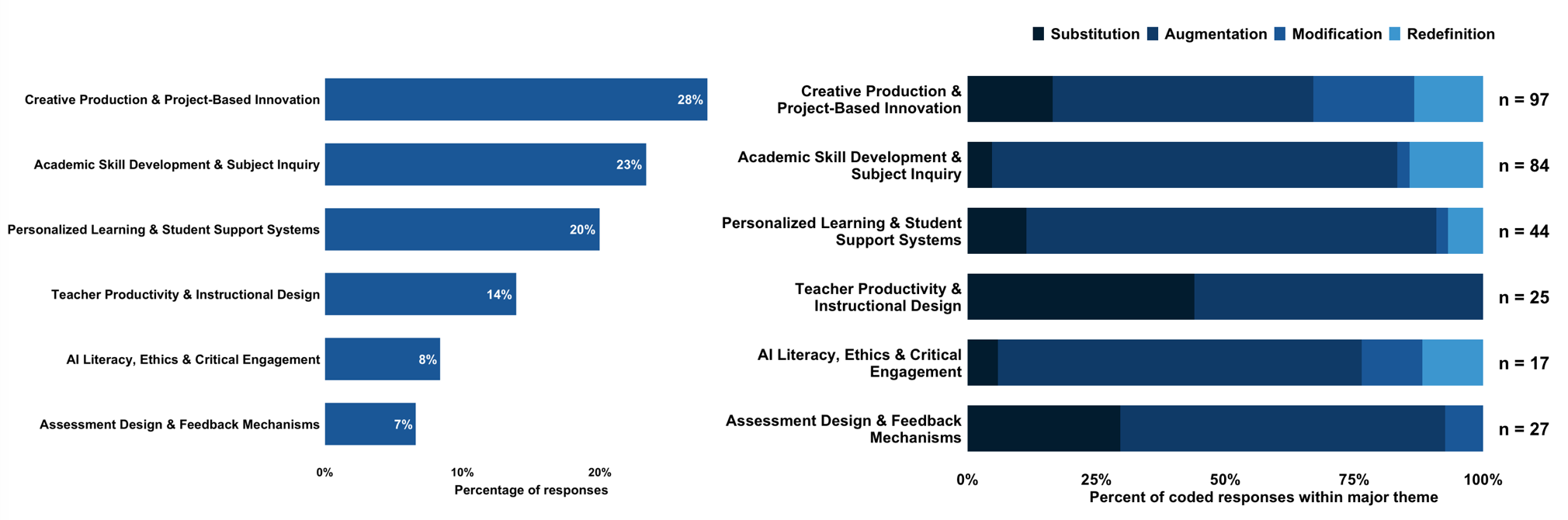
Concluding this examination of emergent AI practices, the 294 “AI-Enhanced Learning and Responsible Use” survey examples were additionally analyzed and broken down into six themes as well as an estimated SAMR level for each response.
Arranged from most to least common, each of the resulting AI-Enhanced Learning and Responsible Use themes is summarized below including direct examples from the 2025–2026 teacher practices.
1. Creative Production and Project-Based Innovation This category (observed in 28% of examples) focused on student-driven creation and immersive experiences. It encompassed the use of AI tools to generate visual art, music, videos, and digital stories, as well as the design of complex projects like marketing campaigns or business plans. It also included gamification strategies where AI acts as a character or scenario generator (e.g., escape rooms, historical simulations) to deepen engagement through active participation. Specific examples across the 2025–2026 data spanned the entire range of the SAMR framework:
“I asked students to use ChatGPT in order to create some pictures of the characters from Sense and Sensibility.” (Substitution)
“Using Mozart AI to create soundtracks, incorporating real-life everyday sound samples, and using GarageBand to create a song track for a game board.” (Augmentation)
“Use of AI to create solutions to international conflicts in which AI helps the student design the why, where, what, and how of each solution.” (Modification)
“I created a custom GPT that served as a Kaiju Mitigation Simulator to teach collaborative crisis planning and critical thinking.” (Redefinition)
2. Academic Skill Development and Subject Inquiry This theme (found in 23% of examples) addressed the application of AI to core academic disciplines and skill acquisition. It included using AI to improve writing mechanics, conduct literature reviews, analyze scientific data in labs, or explore historical figures and cultural contexts. The focus here was on deepening subject matter understanding and mastering traditional academic skills through AI-assisted inquiry rather than just content creation. Although most examples from 2025–2026 were categorized as Augmentation level use, examples of Academic Skill Development and Subject Inquiry spanned the full range of the SAMR framework:
“Using Google and AI to answer questions about different cultures and customs.” (Substitution)
"One example of an innovative practice implemented this year is intentional pedagogy with AI technology, specifically using AI-powered, real-time “digital twins” of historical figures for student inquiries. Instead of traditional research projects, students were tasked with interviewing an AI-driven simulation of a historical person to investigate a complex event." (Redefinition)
3. Personalized Learning and Student Support Systems This theme (found across 20% of all examples) encompassed practices where AI was used to tailor the educational experience to individual student needs. This included adapting content for diverse learning levels (e.g., ESL or special education), providing subject-specific tutoring via chatbots, and supporting student well-being through self-esteem building or future identity visualization projects. The goal was to enhance accessibility and motivation by meeting learners where they are. Most examples of Personalized Learning and Student Support Systems in 2025–2026 were coded as Augmentation-level practice, but examples included all levels of the SAMR framework:
“Use of AI to differentiate reading passages for readers at different levels” (Augmentation)
“Children who finished the math problems quickly and also completed the supplementary problems had AI generate additional problems for them to review on their own.” (Augmentation)
4. Teacher Productivity and Instructional Design This category (observed in 14% of example responses) captured educator-facing practices where AI was used to streamline administrative and preparatory tasks. Such practices included generating lesson plans, creating worksheets and slides, drafting communications with parents, and managing classroom logistics. The primary goal of increased teacher efficiency allowed capacity to focus more on direct student interaction rather than content preparation but led to the classification of nearly all Teacher Productivity and Instructional Design as Substitution or Augmentation-level.
“Using Gamma AI to create my slide presentation” (Substitution)
“Using Canva to design graphic organizers, slideshows, and interactive whiteboards. I use Canva for everything, and now I use AI to help me design coloring pages or extra features for my content.” (Augmentation)
5. AI Literacy, Ethics and Critical Engagement This theme (found in 8% of responses) focused on the meta-cognitive understanding of AI itself. It includes teaching students how to prompt effectively, verify information for accuracy and bias, and understand the limitations of AI tools. It also covered discussions on academic integrity, policies regarding when not to use AI (e.g., field trips), and critical skepticism about AI’s impact on human cognition and society. Teacher examples of AI Literacy, Ethics, and Critical Engagements were almost all categorized in the lower levels Substitution and Augmentation levels of the SAMR model.
“Embedded learning questions into the students’ Stages of Progression documents, requiring the students to use any AI tool to find, discover, and think critically.” (Augmentation)
6. Assessment Design and Feedback Mechanisms This final category (found in 7% of responses) included the restructuring of how learning is measured. Examples included using AI to generate rubrics, grade assignments, or provide immediate feedback on student work. In addition, this theme also encompassed pedagogical strategies where students analyzed AI-generated feedback alongside peer reviews to foster metacognition and self-regulation in their learning process. Examples of the former were more plentiful and largely classified as Augmentation-level use, but the latter examples often reached Modification or Redefinition-level practices.
“I used AI to generate a rubric for a group presentation.” (Substitution)
“Having students create personal lesson plans with AI that included tests, quizzes, activities, cost, …” (Augmentation)
As a conclusion to this inquiry, a final visualization of the shared and unique educational opportunities for each of the six AI themes uses the SAMR model to further explore the nuance and complexity of emergent AI use across global PreK–12 settings:
The visualization begins on the left by organizing responses into six types of AI-related practices and then shows how each practice connects to associated subthemes. These subthemes offer a more detailed view of teacher and student AI use and are mapped to the four SAMR levels on the right. The figure highlights the varied nature of AI use across classrooms: teachers and students described AI practices that differed substantially in purpose, complexity, and connection to learning tasks. Because these practices aligned with different SAMR levels, the results suggest that AI’s educational value depends not simply on access, but on the ways teachers and students integrate AI into teaching and learning.
It is noteworthy that the different AI use themes and subthemes were not equally represented across all SAMR levels. Four out of the six AI themes– AI Literacy, Ethics & Critical Engagement, Teacher Productivity & Instructional Design, Assessment Design & Feedback Mechanisms, and Personalized Learning & Student Support Systems – were almost completely categorized at the Substitution and Augmentation levels. These four themes emphasize AI for automation of existing practices, (i,e. AI for lesson planning, grading, and communication) which may yield moderate improvements in efficiency, but fall short of dramatic educational reform. By contrast, the examples teachers shared across the Academic Skill Development & Subject Inquiry themes showed greater concentration of practices at the Redefinition level (primarily in the subcategory of Historical Reconstruction and Cultural Exploration). In addition, using AI for Creative Production & Project-Based Innovation accounted for most of the Modification-level observations, and roughly half of the Redefinition-level ones.
Summary and Discussion
Synthesizing key findings on how AI functions as an informational participant in classroom learning.
+
Looking collectively across the quantitative and qualitative results, many findings emerge to address the four research questions. First, the study aligns with recent, global research showing that teachers generally have strong access to AI resources. In terms of teacher beliefs, Apple Distinguished School teachers generally expressed positive beliefs about both the value of responsible AI learning and AI’s potential impact on students. While beliefs varied by grade level, subject area, and experience, teacher perceptions have remained relatively stable since the substantial shift observed between 2023 and 2024.
Examining trends in teaching and learning, the study showed that teachers and students continued to use technology across a wide range of teaching and learning practices. Like prior research, much of teachers’ professional use of technology was concentrated in Substitution and Augmentation-level tasks while AI use was increasingly embedded in teachers’ professional practices, particularly for lesson planning, communication, and assessment. Student technology use generally included increased opportunities for more transformative Modification and Redefinition practices and was again significantly associated with higher levels of student engagement across the study settings. Collectively, the 2025–2026 findings show that emergent AI use across ADS classrooms was closely associated with teachers’ beliefs and broader pedagogical practices. Specifically, emergent AI use was most strongly associated with student-directed practices such as self-directed learning, critical thinking, collaboration, and creating content, suggesting that classrooms already emphasizing deeper, student-centered learning tended to exhibit more frequent and varied AI use.
At the Substitution level, AI can reduce cognitive demands that distract from learning. However, it can also remove the cognitive work students need to develop understanding. This risk is not unique to AI as textbooks with excessive scaffolding, overly detailed lab procedures, and step-by-step writing templates can produce similar effects when they take essential decision-making out of the learning process. This problem can appear in Substitution-level uses of many technologies because the underlying learning task remains largely unchanged. AI, however, can intensify the risk because it can streamline a task while also reducing the cognitive effort that gives the task its instructional value. Even modest changes that enhance, redesign, or replace Substitution-level uses with Augmentation-level practices can meaningfully improve learning outcomes.
Additionally, the emergent AI themes clustered across teacher productivity tasks and student knowledge-production tasks. This pattern suggests that AI may function as an informational participant in classroom socio-technical systems, shaping what teachers and students can access, produce, evaluate, and share (Burt, 2026). In this inquiry, AI use appeared to redistribute cognitive and informational work across teachers, students, and digital systems.
For schools navigating AI policy and practice, these findings suggest that effective technology integration depends less on whether teachers adopt AI and more on how educational communities structure participation, engagement, and learning tasks. Rather than emphasizing substitution- or augmentation-level uses such as automating grading, schools may benefit from supporting AI practices aligned with modification and redefinition, particularly those that promote critical thinking, complex problem solving, creativity, collaboration, and student agency.
The central implication is that AI creates, but does not guarantee, an opportunity to rethink instructional practice. The considerable variation in teachers’ AI use suggests that schools can identify and scale practices in which technology makes learning more engaging, meaningful, creative, and student-centered. As such, the goal for school leaders should not be, “How do we get teachers to use AI?” but rather, “How can we help teachers use all resources, including AI, in ways that make learning more engaging, meaningful, creative, and student-centered?”
Implications and Next Steps
Actionable recommendations for teachers and school leaders to thoughtfully integrate AI into instructional design.
+
“One innovative practice I implemented this year was a role-play diagnostic activity in my Biology classroom supported by AI-generated video scenarios. Working in small groups, students analyzed the symptoms presented in the video and discussed possible nutritional causes. They then took on the role of “doctors,” diagnosing the patient’s condition and proposing dietary recommendations based on their understanding of proteins and essential amino acids. Using an AI video to simulate a patient consultation created a more immersive and realistic learning experience. It helped students connect biological concepts to real-life health scenarios while promoting collaboration, critical thinking, and scientific reasoning." -High School Math and Science Teacher from Indonesia
While education and schooling remain a largely static and traditional component in most communities, educational technology constantly evolves. While AI represents a breakthrough in the evolution of technology for teaching and learning, it is increasingly critical to consider and empirically reflect on the purposes, approaches, and outcomes for technology in the future of PreK–12 education.
For teachers, the current study results suggest several areas for continued reflection and development:
Design AI-supported learning around student thinking, agency, and creation. The strongest relationships between AI use and classroom practice appeared when students engaged in self-directed learning, collaboration, critical thinking, complex problem solving, and creative production. Student self-directed learning was positively associated with AI-supported idea generation (ρ = .396), creative expression and products (ρ = .392), and communication (ρ = .354). Similarly, students’ use of technology to create content was associated with AI-supported creative expression (ρ = .365), idea generation and planning (ρ = .335), and communication (ρ = .304). This all suggests that AI may be most productive when students use it to pursue questions, make decisions, generate ideas, collaborate, and create products, rather than simply complete tasks on their behalf.
Consider opportunities to move beyond efficiency-oriented applications toward instructional redesign. Much of the teacher-reported AI use involved lesson planning, grading and assessment, and communication. Four of the six major AI themes were concentrated primarily at the Substitution and Augmentation levels of the SAMR model. Such applications of AI can provide improvements in efficiency and quality while the findings also identified greater opportunities for teachers and students to explore AI-supported practices involving creative production, inquiry, subject-specific exploration, and project-based learning, where Modification and Redefinition were more prevalent.
Make critical engagement with AI an integral component of AI-supported learning. The findings demonstrate considerable variation in how teachers and students are currently using AI, including practices involving evaluation of information, consideration of accuracy and bias, and reflection on the appropriate role of AI. Rather than treating responsible AI use as a separate topic, these practices suggest an opportunity to embed evaluation, verification, source consideration, and reflection directly within AI-supported academic work. This approach positions students not simply as users of AI systems, but as active participants in evaluating and shaping the information those systems produce.
Put into direct action, every teacher can begin to ask:
What learning goal is this technology supporting? Use AI only when it strengthens the underlying teaching and learning practice.
Does this use deepen student thinking? Prioritize uses that help students question, create, evaluate, revise, collaborate, or exercise agency.
Am I redesigning the task or just automating it? Look for opportunities to move beyond simple substitution toward more creative, student-driven learning.
What am I learning from my own classroom? Use small cycles of action research, reflection, and evidence-gathering to test assumptions about when AI helps learning.
For school leaders and educational systems, the findings also suggest several considerations:
Center pedagogy rather than adoption when developing AI initiatives. While access to technology remains important, these findings suggest that the educational value of AI depends less on whether teachers and students use particular tools and more on how those tools are integrated into learning experiences. Self-directed learning, critical thinking, complex problem solving, collaboration, and creative production were consistently associated with teacher and student AI practices. Professional learning may therefore be most productive when it focuses on learning design rather than tool adoption alone.
Support a progression from augmentation toward instructional transformation. The predominance of Substitution and Augmentation examples suggests that many educators are initially incorporating AI into existing instructional routines. These uses may improve efficiency, feedback, planning, or access to support. At the same time, the concentration of Modification and Redefinition examples within creative production, project-based innovation, and subject inquiry points to opportunities for schools to help educators explore how AI can enable new forms of learning rather than simply automate existing practices.
Create structures for ongoing teacher inquiry and shared learning. The rapid development of AI technologies presents challenges for traditional professional development models. These findings point to the value of ongoing experimentation, reflection, and exchange among educators. Teacher action research, shared examples, and locally developed evidence may help schools identify effective practices while responding to changing technologies and classroom needs.
Evaluate AI implementation through the quality of learning experiences rather than adoption alone. Measures focused only on access, frequency, or adoption provide an incomplete picture of AI’s educational value. Schools may benefit from examining what students and teachers are actually doing with AI, including whether AI-supported learning creates greater opportunities for student agency, collaboration, critical thinking, complex problem solving, and creative production.
Put into direct action, every school and program leader can begin to ask:
Are we centering pedagogy or adoption? Professional learning should help teachers understand how and when AI can meaningfully enhance learning, not simply which tools to use.
Are we supporting instructional redesign? The goal should be to help teachers move from basic substitution toward more creative, collaborative, student-centered, and transformative uses of AI.
Are we evaluating quality, not just frequency? Schools should look beyond access and adoption rates to examine what teachers and students are actually doing with technology and how those practices affect engagement, creativity, collaboration, critical thinking, and learning.
Are we creating conditions for responsible experimentation? Leaders can provide clear expectations while also giving teachers time, support, and shared examples to explore effective AI use.
Are we learning from our own classrooms? Schools can support action research and data-informed reflection to identify which AI-supported practices are working, for whom, and under what conditions.
Collectively, these findings suggest that the central challenge for schools is not simply determining whether AI should be used but determining how AI can participate in teaching and learning in ways that preserve and extend meaningful human participation. The strongest patterns observed in this study were associated with classrooms in which students were active participants in creating, communicating, pursuing their own interests, and engaging in higher-order thinking. As AI capabilities continue to evolve, these findings provide a basis for shifting attention from AI adoption toward the intentional design of learning environments in which AI supports, rather than displaces, student agency, critical engagement, and meaningful learning.
"I developed a project with my 7th-grade students about Jules Verne's book *Journey to the Center of the Earth*, while we were working on the structure of planet Earth. The proposal was for them to compare the author's ideas with the knowledge of the time and the current knowledge of scientists about geology. In the first class dedicated to the topic, they used AI to search for information about the work and, subsequently, we discussed why that was a good way to use AI. Following that, we watched about half of the film of the same name released in 2008. In subsequent classes, the students had time to produce a video or poster comparing the previous points and adding a personal reflection on the role of science fiction in society. The results were quite interesting.” -Grade 8 Science Teacher from Brazil
References
Literature and works cited in the development of this research study.
+
Adair, A., Howell, J., Jacklin, A., & Radford, A. W. (2025). U.S. high school students’ use of generative artificial intelligence: New evidence from high school students, parents, and educators. College Board Research.
Apple Distinguished Schools (2025). Apple Distinguished Schools: Program overview.
Aravantinos, S., Lavidas, K., Komis, V., Karalis, T., & Papadakis, S. (2026). Artificial Intelligence in K-12 Education: A Systematic Review of Teachers’ Professional Development Needs for AI Integration. Computers, 15(1), 49. https://doi.org/10.3390/computers15010049
Bebell, D., & Burt, K. (2025). Engaged teaching: Engaged learning, An empirical study of teaching, learning, and student engagement across the K-12 community of Apple Distinguished Schools [White paper]. Reflective Educational Research. https://doi.org/10.13140/RG.2.2.10252.99206
Bebell, D., & O'Dwyer, L. M. (2010). Educational outcomes and research from 1:1 computing settings. The Journal of Technology, Learning, and Assessment, 9(1), 1-16.
Bebell, D., O’Dwyer, L., Russell, M., & Hoffman, T. (2010). Concerns, considerations and new ideas for data collection and research in educational technology studies. Journal of Research on Technology in Education, 43(1), 29-52. https://doi.org/10.1080/15391523.2010.10782560
Bebell, D., & Pedulla, J. (2015). A Quantitative Investigation into the Impacts of 1:1iPads on Early Learner’s ELA and Math Achievement. Journal of Information Technology Education: Innovations in Practice, 14, 191- 215. https://doi.org/10.28945/2175
Blundell, C., Mukherjee, M., & Nykvist, S. (2022). A scoping review of the application of the SAMR model in research. Computers and Education Open, 3(100093), 1-12. https://doi.org/10.1016/j.caeo.2022.100093
Burt, K. (2026). Platforms, algorithms, and the shifting boundaries of information horizons. Information Research an International Electronic Journal, 31(ISIC), 61–77. https://doi.org/10.47989/ir31ISIC65141
Burt, K., & Bebell, D. (2026). Educational technology and the everyday information practices that shape student thinking and learning. Information Research an International Electronic Journal, 31(ISIC), 78–96. https://doi.org/10.47989/ir31ISIC65142
Cristia, J., Ibarrarán, P., Cueto, S., Santiago, A., & Severín, E. (2017). Technology and child development: Evidence from the One Laptop per Child program. American Economic Journal: Applied Economics, 9(3), 295–320. https://doi.org/10.1257/app.20150385
Escueta, M., Nickow, A. J., Oreopoulos, P., & Quan, V. (2020). Upgrading education with technology: Insights from experimental research. Journal of Economic Literature, 58(4), 897–996. https://doi.org/10.1257/jel.20191507
European Commission. (2013). Survey of schools: ICT in education – Benchmarking access, use and attitudes to technology in Europe’s schools: Final report. Publications Office of the European Union. https://data.europa.eu/doi/10.2759/94499
European Commission. (2019). 2nd survey of schools: ICT in education. Objective 1: Benchmark progress in ICT in schools. Executive summary. Publications Office of the European Union.
Fisher, C. W. (1989). The influence of high computer access on student empowerment (ACOT Report No. 1). Advanced Technology Group, Apple Computer, Inc.
Hamilton, E. R., Rosenberg, J. M., & Akcaoglu, M. (2016). Examining the Substitution Augmentation Modification Redefinition (SAMR) model for technology integration. Tech Trends, 60, 433-441. https://doi.org/10.1007/s11528-016-0091-y
Heppen, J. B., Kurki, A., & Brown, S. (2020). Can texting parents improve attendance in elementary school? A test of an adaptive messaging strategy (NCEE 2020–006). U.S. Department of Education, Institute of Education Sciences, National Center for Education Evaluation and Regional Assistance. http://ies.ed.gov/ncee
Hiebert, E. H., Quellmalz, E. S., & Vogel, P. (1989). A research-based writing program for students with high access to computers (ACOT Report No. 2). Advanced Technology Group, Apple Computer, Inc.
Kaufman, J. H., Woo, A., Eagan, J., Lee, S., & Kassan, E. B. (2025). Uneven adoption of artificial intelligence tools among U.S. teachers and principals in the 2023–2024 school year. RAND Corporation. https://www.rand.org/pubs/research_reports/RRA134-25.html
Kennedy, C., Rhoads, C., & Leu, D. J. (2016). Online research and learning in science: A one-to-one laptop comparison in two states using performance-based assessments. Computers & Education, 100, 141–161. https://doi.org/10.1016/j.compedu.2016.05.003
LEGO Education. (2024). State of classroom engagement report: How global insights from 6,000-plus administrators, teachers, parents, and students reveal strategies to build more engaged classrooms. LEGO. https://education.lego.com/en-us/classroom-engagement-report/
Mishra, P., Warr, M., & Islam, R. (2023). TPACK in the age of ChatGPT and generative AI. Journal of Digital Learning in Teacher Education, 39(4), 1–17. https://doi.org/10.1080/21532974.2023
Ofcom. (2023, November 28). Gen Z driving early adoption of Gen AI, our latest research shows.
Stoneman, D. (2018). (dissertation). A quantitative Inquiry into the Effectiveness of One-to-One Mobile Computer Access for Students. http://www.proquest.com/docview/2051185823
Tang, Y., & Zhong, L. (2026). K-12 Teachers’ Adoption of Generative AI for Teaching: An Extended TAM Perspective. Education Sciences, 16(1), 136. https://doi.org/10.3390/educsci16010136
Zheng, B., Warschauer, M., Lin, C.-H., & Chang, C. (2016). Learning in one-to-one laptop environments: A meta-analysis and research synthesis. Review of Educational Research, 86(4), 1052–1084. https://doi.org/10.3102/0034654316628645
Additional Resources
Further reading and materials for educators exploring AI and technology integration.
Bowler, L. J. (2026). The digital rights of children and youth: An annual review of information science and technology (ARIST) paper. Journal of the Association for Information Science and Technology, 1–22. https://doi.org/10.1002/asi.70048
Chou, C. C. C., Block, L., & Jesness, R. (2014). Strategies and challenges in iPad initiative. In Proceedings of the International Conference on Mobile Learning 2014. International Association for Development of the Information Society.
Crompton, H., & Burke, D. (2017). Research Trends in the Use of Mobile Learning in Mathematics. In Management Association, I. (Ed.), Blended Learning: Concepts, Methodologies, Tools, and Applications (pp. 2090-2104). IGI Global.
Cummings, J. & James, S. (2026). From Enhancement to Transformation: Instructional Design Implications from a SAMR-Based Analysis of AI Tools in K-12 Education. In Proceedings of EdMedia 2026 Edinburgh (pp. 4176-4180). Waynesville, NC: Association for the Advancement of Computing in Education (AACE). https://www.learntechlib.org/primary/p/2129847/
Fabian, K., & Topping, K. J. (2019). Putting “mobile” into mathematics: Results of a randomized controlled trial. Contemporary Educational Psychology, 59. https://doi.org/10.1016/j.cedpsych.2019.101783
Graham, S. E. (2010). Using propensity scores to reduce selection bias in mathematics education research. Journal for Research in Mathematics Education, 41(2), 147–168.
Lloyd, A. (2010). Framing information literacy as information practice: Site ontology and practice theory. Journal of Documentation, 66(2), 245-258. https://doi.org/10.1108/00220411011023643
Lund, B., Hovious, A., & Kim, J. (2026). Discourses of data literacy: A critical literature review. Journal of the Association for Information Science and Technology, 1–19. https://doi.org/10.1002/asi.70054
Mishra, P., & Koehler, M. J. (2006). Technological pedagogical content knowledge: A framework for integrating technology in teacher knowledge. Teachers College Record, 108(6), 1017–1054.
Organisation for Economic Co-operation and Development. (2026). OECD digital education outlook 2026: Exploring effective uses of generative AI in education. OECD Publishing. https://doi.org/10.1787/062a7394-en
Orlikowski, W. J. (2002). Knowing in practice: Enacting a collective capability in distributed organizing. Organization Science, 13(3), 249–273. https://doi.org/10.1287/orsc.13.3.249.2776
Pangrazio, L., & Selwyn, N. (2019). ‘Personal data literacies’: A critical literacies approach to enhancing understandings of personal digital data. New Media & Society, 21(2), 419-437. https://doi.org/10.1177/1461444818799523
Radulović, L., & Stančić, M. (2017) What is needed to develop critical thinking in schools? Center for Educational Policy Studies Journal, 7(3), 9–25. https://doi.org/10.26529/cepsj.283
Randazzo, S., Lifshitz, H., Kellogg, K. C., Dell’Acqua, F., Mollick, E., Candelon, F., & Lakhani, K. R. (2025). Cyborgs, centaurs and self-automators: The three modes of human-GenAI knowledge work and their implications for skilling and the future of expertise (Working Paper No. 26-036). Harvard Business School. https://www.hbs.edu/faculty/Pages/item.aspx?num=68273
Rezaei, S., Derakhshan, A., & Bagherkazemi, M. (2011). Critical thinking in language education. Journal of Language Teaching and Research, 2(4)
Yanguas, M. L. (2020). Technology and educational choices: Evidence from a one-laptop-per-child program. Economics of Education Review, 76, 101984. https://doi.org/10.1016/j.econedurev.2020.101984
Zhang, A., Ross, A., Patel, K., Bernado, J., Bowie, R., Ribeiro, A. T., Halper, D., Valayaputtur, H., Andreas, J., Loeb, S., Li, L., Lo, K., & Knight, R. (2026). When help is unhelpful: Evaluating AI tutors for productive struggle [Preliminary report]. https://tutormoments.allen.ai